Warren Christopher Quotes
Both sides were supposed to release all their prisoners, those were unconditional. There was some prisoner release that took place but it's not been satisfactory.
Christopher, Warren. "Statements on U.S. Foreign Policy." U.S. Department of State Dispatch, vol. 7, U.S. Government Printing Office, 1996.


At the outbreak of the Civil War the President maintained that the United States was not at war with another nation but was merely putting down a rebellion. When he then ordered a blockade of Southern ports, he was legally blockading his own country. See Thaddeus Stevens.


This clause applied to German POWs in America caused a problem for Blacks in the military were harshly discriminated against by a then discriminating country. The result was that Nazi POWs did not have to move to the back of a theater while the Back GIs were required to, and a host of other gross indignities.

His view, that America had no vested interest in Rwanda, was the prevailing thinking of the Republicans who controlled Congress and many of the Democrats as well. President Clinton considered intervention in Rwanda, but decided against it given all the opposition and little time to educate the American public to a different position. The result was the genocide in Rwanda where over 500,000 Tutsis were exterminated by the Hutus. Clinton, several years later not only admitted that he made a political and moral mistake, but officially apologized to Rwandan Tutsis who remained alive. He had intervened very successfully in Kosovo to prevent more murder of ethnic Muslims and was given a hard time politically by his opposition even though the brilliant effort cost no American lives. The United States and the UN, all bearing guilt for doing little in Rwanda, did help to set up the mechanism for the trials of the worst murderers and at least many of the most guilty were brought to justice.


With promises the success lies in following through and keeping the promise which is usually very costly. A threat that fails meanwhile can be the most expensive thing. We make a threat to deter a foreign power from something. Failure occurs when they are not intimidated and go ahead anyway. Then if we follow through on the threat, that is very costly—a war, a trade embargo, or whatever. Not following through on the threat is the costliest of all as we lose our credibility, trust and honor.


Some people believe that the United States pressured Pakistan to enable America to support the Mujahideen in their effort to fight the Russian occupation of Afghanistan. Actually the President (and virtual dictator) of Pakistan wanted aid from America and was offering bases. America did not want bases but did want a platform for arming and training the Mujahideen, Pakistan allowed us to use Pakistan as a platform. We increased our foreign aid to Pakistan by 500 percent. There was no arm twisting.

This was a very important statement for the President to make. At the time there was a very conservative right wing that was advocating withdrawing from the UN or at the very least not paying such a large share of the UN funds for operation.

This was part of the negotiation of a peace treaty with the Barbary States. The Barbary Pirates had an incredible extortion racket going in the Mediterranean. If nations would pay them an annual sum each year, they would not attack and seize merchant ships of that country and sell the ships and goods while holding the sailors for ransom. Military action on land and sea by American marines and naval ships had caused much damage and intimidated the Barbary States somewhat. See {640870}
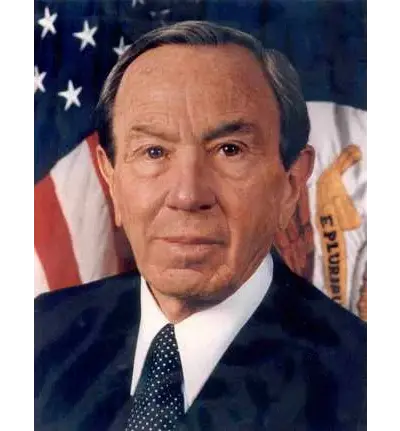
Warren Minor Christopher was an American lawyer, diplomat and politician. During Bill Clinton's first term as President, he served as the 63rd United States Secretary of State.
