Hague Convention Quotes
Prisoners of war shall be treated as regards board, lodging, and clothing on the same footing as the troops of the Government who captured them.
This clause applied to German POWs in America caused a problem for Blacks in the military were harshly discriminated against by a then discriminating country. The result was that Nazi POWs did not have to move to the back of a theater while the Back GIs were required to, and a host of other gross indignities.
Laws and Customs of War on Land (Hague IV), The Qualifications of Belligerents, Article 7, October 18, 1907
Sourced by: Eigen's Political and Historical Quotations

aware of the atrocities inflicted on Union prisoners of war at Confederate Prison Camps His testimony was corroborated, and the Commandant of Andersonville was found guilty and hanged.


During the Seminole War, Ross, as a very respected Cherokee Chief and leader, had been asked to persuade some if the Seminole Chief’s to come to a conference to discuss and negotiate a settlement to the conflict. Ross was successful . Seminole Chief Micanopy, twelve other chieftains, and a number of Seminole warriors accompanied the Cherokee deputation to the headquarters of the United States Army at Fort Mellon, where they were to discuss the matter. When they arrived General Thomas Jesup arrested the Seminoles instead of negotiating. Ross, a very educated man who was literate in English, o the Secretary of War. Jesup in retrospect was one of the disgraces in the history of the U. S. Army was admired, not for his fighting or his lack of ethics, but for his management and logistics as the Quartermaster General. For more quotations showing Jesup’s character, see quotations 643611 and 643612.

The German Generals talked him out of the idea, but the quotation gives an insight into the Character of the German Leader. It never occurred to him that the Russians might retaliate and murder German prisoners.

The note was found in an abandoned Japanese camp on Bataan. There are some who believe that this note was a forgery. However, most think it genuine as it reflected one of the Japanese
“aces in the hole” to defend against an allied invasion of the Japanese mainland. It was one of the reasons that some American planners advocated use of the Atomic Bomb. Of course that was a real risk of using the bomb. The Japanese might be so angry and feel morally abused and kill the many allied prisoners they had. Many thought it was a lesser risk because it did not have the symbolic animus that foreigners occupying the Japanese homeland had. The quotation illustrates the amazing complexity that the American and allied leadership faced trying to end WWII in the Pacific.

There has always been some confusion in the case of the Wars in Afghanistan and Iraq. The Geneva and Hague conventions are very clear when prisoners are official members of an state’s armed force with uniforms, insignia and ranks. It is also clear with respect to civilians. But the combatants of the insurgent and terrorist forces fall in between, and international law is less clear. The George W. Bush administration at first took the position that the captured combatants were not captured soldiers and were therefore not entitled to the treatment due that status. But the military regulations made no distinction as to how prisoners in combat should be treated. It is a very gray area, except that in either case, torture is illegal under U. S. and under International law.

This speech was given 5 months before President Georg W, Bush initiated the invasion of Iraq. Politicians either supported the idea of an Iraq War or simply remained silent lest they be labeled unpatriotic. Obama not only opposed the war, but by 2007 most Americans had also come to believe that Bush’s invasion was a “dumb” and “rash” war.

When the Union army began using Blacks as recruits, the South threatened to execute any Negro soldier they captured. Some Southerners opposed execution but favored enslavement of captured Northern Black soldiers. The Lincoln threat seems to have worked, although Lincoln opposed executing Southern officers in retaliation for the atrocities at southern prisoner of war camps


The swap was made and all captives were released.


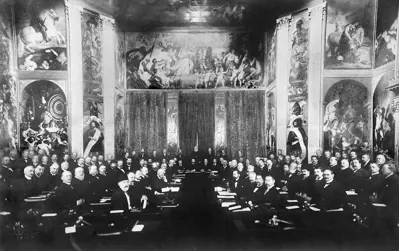
The Hague Conventions of 1899 and 1907 are a series of international treaties and declarations negotiated at two international peace conferences at The Hague in the Netherlands. Along with the Geneva Conventions, the Hague Conventions were among the first formal statements of the laws of war and war crimes in the body of secular international law. A third conference was planned for 1914 and later rescheduled for 1915, but it did not take place due to the start of World War I.
