Sebastian Junger Quotes
Every war I have ever covered – Kosovo, Bosnia, Sierra Leone and Liberia – withstood all diplomatic efforts to end it until Western military action finally forced a resolution.
Sebastian Junger, Journalist and Author, War correspondent, “When force offers the best chance for peace”, The Washington Post, September 15, 2003
Sourced by: Eigen's Political and Historical Quotations


English law and United States law are different. The George W, Bush administration has argued that regime change—removing Sadaam Hussein from power and control of Iraq—would be legal under U. S. law. This belief was never tested in the American Courts during the Iraq War.


After the attack on Fort Sumter, the South Sent “diplomats” to negotiation with the Government. Unfortunately for all, the South really was not open to negotiations as they only had two predetermined positions they would agree to: The first was that the Government should guarantee the perpetual right of states to have slavery if they wished and that fugitive slaves would be returned by the non-slave states. The second was that the Union should recognize the Confederacy as an independent nation and have peaceful relations between the two. The first was impossible to deliver even if the Union would agree to continue slavery, there was no way that the Federal Government could enforce the return of fugitive slaves from many northern states where they were free the second they set foot in the state, and the Northern states demanded States Rights and not being forced to return Fugitive Slaves forcing the Southern States to oppose States Rights when it came to Fugitive Slaves while favoring it for slavery itself. The Federal government could not enforce the Dred Scott Decision under the pro-South Buchanan administration. And Lincoln and most of the Northern Politicians would not accept a complete dissolution of the Union. There are no other possibilities the South would accept and there was really nothing to negotiate.


In this case, he was referring to the situation with the Barbary Pirates who had an incredible extortion racket going in the Mediterranean. If nations would pay them an annual sum each year, they would not attack and seize merchant ships of that country and sell the ships and goods while holding the sailors for ransom. Jefferson favored and authorized war—a naval attack which for many reasons the European nations had not done (they just paid the tribute). Then a peace treaty was finally signed—the first American Treaty.


During the Seminole War, Ross, as a very respected Cherokee Chief and leader, had been asked to persuade some if the Seminole Chief’s to come to a conference to discuss and negotiate a settlement to the conflict. Ross was successful . Seminole Chief Micanopy, twelve other chieftains, and a number of Seminole warriors accompanied the Cherokee deputation to the headquarters of the United States Army at Fort Mellon, where they were to discuss the matter. When they arrived General Thomas Jesup arrested the Seminoles instead of negotiating. Ross, a very educated man who was literate in English, o the Secretary of War. Jesup in retrospect was one of the disgraces in the history of the U. S. Army was admired, not for his fighting or his lack of ethics, but for his management and logistics as the Quartermaster General. For more quotations showing Jesup’s character, see quotations 643611 and 643612.


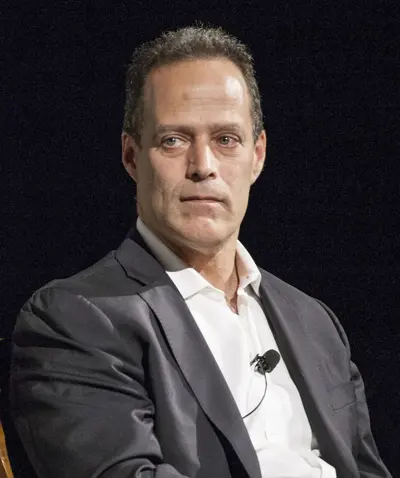
Sebastian Junger is an American journalist, author and filmmaker. He is noted for his book The Perfect Storm: A True Story of Men Against the Sea (1997), a creative nonfiction work which became a bestseller; and for his documentary films Restrepo (2010) and Korengal (2014), which won awards. He also wrote the book War (2010).
