Henry Louis Gates Jr. Quotes
Blacks—across the economic and ideological spectrum—often feel astonishingly vulnerable, of accusations of disloyalty to race.
Henry Louis Gates, Historian & Cultural Reformer, Quoted in The New York Review of Books, September 19, 1996
Sourced by: Eigen's Political and Historical Quotations


At a Senate Judiciary Committee hearing, he was told by a senator to lower his voice.


The term came to be used by many New York Newspapers.

In 1862 the president requested a $600,000 congressional appropriation to finance a pilot program for Negroes freed by the Civil War to emigrate to Africa. He met with a delegation of Black leaders:

At the time Thomas was the Chairman of the Equal Employment Opportunity Commission. In an informal discussion among some of the staff, a white employee was describing the difficulty he had encountered trying to get a bank loan. This quotation illustrates that Thomas has had an antipathy to affirmative action and racial programming or preferences well before he was appointed to the Appellate and later the Supreme Court.


He and other founders believed that Blacks freed from slavery would still suppress wages for whites and hurt industry. The possibility of intermarriage was also viewed as a moral degeneration. Approximately 15,000 Blacks chose to emigrate.

Miller was the first Black American admitted to a Graduate Program—Johns Hopkins—in Mathematics. This document was banned on military bases and installations.

Like many Black players of the era, Flood suffered endless hateful epithets and curses from a white crowd, many of whom resented the fact that Blacks were integrating baseball, but resented them even more when their performance exceeded that of a favorite white player.

This quotation has been one that has been used to argue against Black and other minority racism as well as white racism.


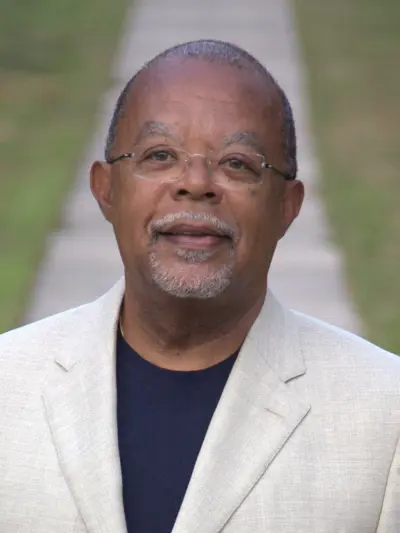
Henry Louis "Skip" Gates Jr. is an American literary critic, professor, historian, filmmaker, and public intellectual who serves as the Alphonse Fletcher University Professor and Director of the Hutchins Center for African and African American Research at Harvard University. He rediscovered the earliest African-American novels, long forgotten, and has published extensively on appreciating African-American literature as part of the Western canon.
