W. E. B. Du Bois Quotes
One ever feels his twoness—an American, a Negro; two souls, two thoughts, two unreconciled stirrings.
W. E. B. Du Bois, 1868-1963, Educator and author, Co-Founder of the NAACP, The Souls of Black Folk, 1903
Sourced by: Eigen's Political and Historical Quotations


In 1862 the president requested a $600,000 congressional appropriation to finance a pilot program for Negroes freed by the Civil War to emigrate to Africa. He met with a delegation of Black leaders:


Bilbo was one of the worst racists who ever served in the Congress.


Black protests and demonstrations were emerging throughout the country after a white police officer shot to death an unarmed black teenager in Ferguson, MO. This argument was made by a number of police apologist whites who could not understand the ferocity and passion of the demonstrations, but Giuliani was the most prominent politician taking that viewpoint. See {642521} for the refutation and response.


Jackson was a civil rights worker who was murdered by white racists trying to intimidate Blacks from their desegregation efforts. King broadened the moral responsibility to those who did not oppose the segregationist system prevalent in the South.

Gahdhi’s early career was in South Africa. What makes this quotation very interesting is that it shows Ghandi---one of the great disciples of brotherhood and equality of all men---had a period when he was outraged that Indians would have Blacks (Kaffirs) located in their neighborhood. It illustrates the personal transition that he made from prejudiced, parochial advocate for a particular ethnic group to an advocate and spokesman for all mankind.


Johnson was the first Black man who won the heavyweight championship at a time when racism in America was rampant. Many whites referred to Jeffries as “The Great White Hope” who would take the champion back for the whites. He didn’t and was beaten badly.


In 1911 the citizens of Honea Path, SC, led by Joshua W. Ashleigh, the State Legislator representing the district and his son, the editor of the local newspaper, dismembered and lynched a Black man, Willis Jackson. Some South Carolinians were distressed and asked the Governor to initiate and investigation. See his later statement on lynching in 1930.
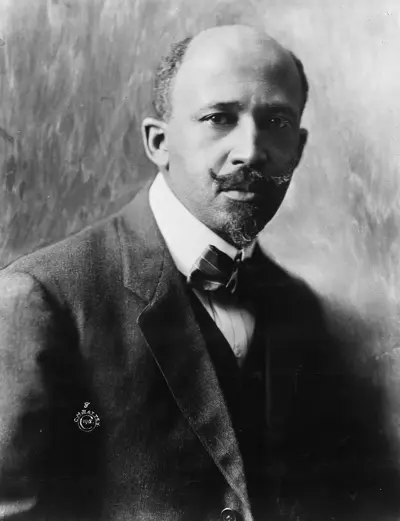
William Edward Burghardt Du Bois was an American sociologist, socialist, historian, and Pan-Africanist civil rights activist. Born in Great Barrington, Massachusetts, Du Bois grew up in a relatively tolerant and integrated community. After completing graduate work at the Friedrich Wilhelm University (in Berlin, Germany) and Harvard University, where he was the first African American to earn a doctorate, he became a professor of history, sociology, and economics at Atlanta University. Du Bois was one of the founders of the National Association for the Advancement of Colored People (NAACP) in 1909.
