Julia Ward Howe Quotes
Battle Hymn of the Republic
First published as a poem in the Atlantic Monthly, February 1862
Julia Ward Howe, 1819-1910, Editor, Poet, and abolitionist, First President, New England Woman Suffrage Association, Editor, The Commonwealth, Name of Song
Sourced by: Eigen's Political and Historical Quotations

John Brown, in a futile effort to start a slave insurrection, raided the arsenal at Harper’s Ferry. His raid failed and he was captured and hanged. However, he became a martyr to the abolitionist movement, and his death is still sung of gloriously to this day. See {584889} and {604003}.

This Civil War recruiting poster was described by the Free Library of Philadelphia as “Civil War recruitment print targeting African Americans by evoking the freedoms granted by the Emancipation Proclamation. Depicts a montage of symbolic scenes centered around an African American Union soldier triumphantly holding up a sword and an American flag with the banner "Freedom to the Slave." He stands near broken shackles upon a tri-color flag adorned with a coiled snake. The flag is tugged upon by one of three joyous slaves freed by an African American soldier. Other scenes depict an African American man reading a newspaper on a rocking chair near a plow and child, African American children entering a "Public School" near a church, and a regiment of "U.S. Colored Troops" marching across a battlefield strewn with dead bodies.”


Belrin had actually written an earlier version during World War I

Andrew had actually contributed money to Brown’s movement. This quotation is a wonderful illustration of the schism that existed in pre-Civil War America. Brown had just led an armed attack on a Federal Facility, been tried and executed. Imagine sympathy and justification for such an act by a leading politician in modern times.
While Lincoln was morally opposed to slavery, at the time the Civil War was not going well for the Union. The Emancipation Proclamation caused the South great distress in terms of practicality and their morale. The slaves if they escaped could come to a Union State and would be forever free. The South would lose labor that they could ill afford to lose as well as they were forced to devote more white manpower to keeping the slaves in bondage. While most people think the Proclamation freed all the slaves, it did not; it only freed slaves in the rebellious Southern states. Border states such as Maryland, not in rebellion, could keep their slaves legally and did until they were freed later.


See {594200} for the first verse—the one most commonly sung. This second verse, suggests that America is not perfect—a problem for some people in a patriotic song which is usually only general glorification and uncritical praise. This song was considered seriously as our national anthem, and was actually used at the first international Olympics when an American won the event. Our National Anthem had not been officially selected then. One of the reasons for its selection over America, The Beautiful was the line in this verse asking God to mend the American flaws.


The notion that a the first line of a national anthem should be focused on the survival of the nation is explained by the history of countries that have and have not existed having been overrun and occupied and absorbed into other nations. That fear exists centuries later. See Poland for another example {642422}.


The 3rd verse is rarely sung because of its reference to the then existing and generally accepted system of indentured servitude and slavery.

This great patriotic hymn was initially written as a poem and published in The Atlantic Monthly, February 1862. This last verse called for men to be willing to die to for the freedom of other men (the slaves) just as Christ had been willing to die to save men. This call was amazingly successful and struck a chord for many on the Union side for whom the Civil War was a holy war. Ironically, this powerful last verse is not familiar to most Americans who know and often sing the first verse.

The Union troops had just been routed at Bull Run. Many in the North thought that the war would be a short one with little disruption of loss of life. Here Norton, like so many others, provided a a more realistic assessment. Also note the reference to “barbarism” in the South, When the Union was formed, the Southern states were not as well developed as the North from an industrial, educational or cultural perspective. There were vestiges of aristocracy, crude law enforcement, and much more poverty (Virginia excepted) than in the North. Most Northerners thought that the South would reform—modernize and become more like the North, but instead the gulf became greater as the North itself developed and changed rapidly while the South was mired in its traditions with their aristocracy gaining more political, economic and cultural control. This attitude of Northern superiority, objectively valid though it may have been, was sorely resented by the South and this resentment has persisted into relatively modern times.


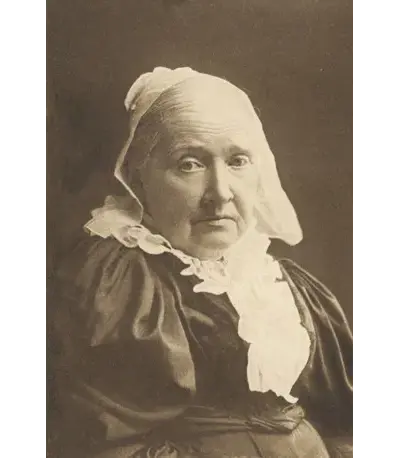
- Born: May 27, 1819
- Died: October 17, 1910
- Nationality: American
- Profession: Activist
Julia Ward Howe was an American poet and author, known for writing "The Battle Hymn of the Republic" and the original 1870 pacifist Mother's Day Proclamation. She was also an advocate for abolitionism and a social activist, particularly for women's suffrage.
