Michael Hayden Quotes
At the end of the 30 Years War then, Europe broadly decided to separate the sacred from the secular in its political culture. I know that is an oversimplification, but it is instructive, and it led to a growth in religious tolerance that has characterized the best of Western life since.
Hayden, Michael V. Playing to the Edge: American Intelligence in the Age of Terror. Penguin Press, 2016.


Later, as President in 1811, Madison vetoed a bill granting Federal land to build a Baptist church in the Mississippi territory.


It was drafted by John Adams. Note that there was freedom of religion for Christians and not others. Of all the colonies, Massachusetts had the worst record of religious intolerance with Puritans controlling everything. Rhode Island and Connecticut were created by religious dissenters from Massachusetts. Adams had all he could do to get the Christian sects on an equal footing ratified. The other colonies however, insisted to a total freedom of religion clause which became the First Amendment to the national Constitution. Adams himself was a kind of secular, cultural Christian who did not believe in the divinity of Christ and other Christian doctrine. See {592695} to illustrate this.


This is a remarkable quotation in that it shows us that there was virtual unanimity about the separation of church and state including the various clergy who were in support of it. Yet in the 21st century there was considerable controversy among some fundamentalist groups who sought more religious influence and/or control of government policy and criminal laws.


This was a remarkable public statement for its time. No other political leader of an Islamic country would dare claim that people have a right to be atheists. Very few would even suggest that people should be free to choose their own religion.


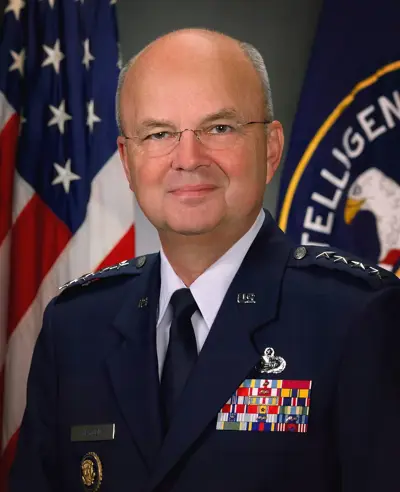
Michael Vincent Hayden is a retired United States Air Force four-star general and former Director of the National Security Agency, Principal Deputy Director of National Intelligence, and Director of the Central Intelligence Agency. Hayden currently co-chairs the Bipartisan Policy Center's Electric Grid Cyber Security Initiative. In 2017, Hayden became a national security analyst for CNN.
