Sandra Day O'Connor Quotes
Those who would renegotiate the boundaries between church and state must therefore answer a difficult question: why would we trade a system that has served us so well for one that has served others so poorly?
O'Connor, Sandra Day. Concurring opinion. McCreary County v. American Civil Liberties Union of Ky., 545 U.S. 844, Supreme Court of the United States, 27 June 2005, p. 882.


This quotation is one of the first to make the critical observation that the only time that tolerance of a religion is necessary is when there is an established church and others that deviate from it. If there is no established church, as the Founding Fathers envisioned, there is no preeminent church to do the tolerating. All are equal. In practice, Protestant churches were proportionately dominant in early America and up through the 20th century. So most of the issue of tolerance problems in America were cultural. And there is still a minority of Christians who believe that America should be a Christian country and other religions should be “tolerated.” However, Clinton and most of the founders did not want to see even general Christianity established as the national religion even they it was the majority religion.

This is one of the key documents showing the “wall of separation of church and state” was in use in early America. Almost 200 years later the Chief Justice of the Supreme Court seemed ignorant of this communications. See William Rehnquist: {373663}


This is a remarkable quotation in that it shows us that there was virtual unanimity about the separation of church and state including the various clergy who were in support of it. Yet in the 21st century there was considerable controversy among some fundamentalist groups who sought more religious influence and/or control of government policy and criminal laws.


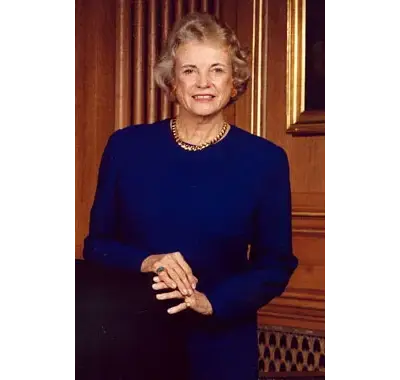
Sandra Day O'Connor is a retired attorney and politician who served as the first woman associate justice of the Supreme Court of the United States from 1981 to 2006. She was the first woman nominated and confirmed. Nominated by President Ronald Reagan, she was considered the swing vote for the Rehnquist Court and the beginning of the Roberts Court.
