Tariq Ramadan Quotes
The fact that Western Muslims are free means that they can have enormous impact. But it would be wrong to claim that we are imposing our ways on the West. New ideas are now coming from the West. To be traditional is not so much a question of protecting ourselves as to be traditionalist in principle.
Ramadan, Tariq. Western Muslims and the Future of Islam. Oxford UP, 2004.


While this type of modernization had been a theme of her reign, it was particularly fascinating at this time when China had been invaded by Japan and 7 Western Countries, she still argued that the only way for China to thrive and attain true independence was to reform and adopt many Western Ways. Chinese leader after her gave lip service to doing this but never wanted to implement the reforms lest the lose power. Ironically, it was under Communist leader Deng Xiaoping, 1904-1993, that Cixi’s notion of adopting modern Western economic and technological models and approaches was finally implemented and then China made the greatest improvement of any large society ever in a relatively short term. However, Deng stopped short of adopting Western notions of political freedom.

Some Muslims refer to Christians as polytheists because of the concept of the Trinity. To them this is worshipping more thn one God. The Roman Catholic practice of praying to the Virgin Mary is another exmple for them.


In one of the historical ironies of the 12th century, a Christian sect preferred the rule of the Muslims than their Christian brethren—on the grounds of religious tolerance. It illustrates the changes that take place over time. By the 21st century, it was the Christians who were thought of as tolerant and the Muslims as the opposite.


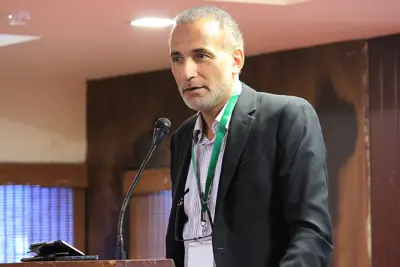
Tariq Ramadan is a Swiss Muslim academic, philosopher, and writer. He was a professor of contemporary Islamic studies at St Antony's College, Oxford and the Faculty of Theology and Religion, University of Oxford, but as of 2018 is taking an agreed leave of absence. He is a visiting professor at the Faculty of Islamic Studies at Hamad Bin Khalifa University in Qatar, and the Université Mundiapolis in Morocco. He is also a senior research fellow at Doshisha University in Japan. He is the director of the Research Centre of Islamic Legislation and Ethics (CILE), based in Doha. He is a member of the UK Foreign Office Advisory Group on Freedom of Religion or Belief. He was elected by Time magazine in 2000 as one of the seven religious innovators of the 21st century and in 2004 as one of the 100 most influential people in the world and by Foreign Policy readers (2005, 2006, 2008–2010, 2012–2015) as one of the top 100 most influential thinkers in the world and Global Thinkers. Ramadan describes himself as a "Salafi reformist".
