Victor Hugo Quotes
We are for religion against the religions.
Hugo, Victor. Les Misérables. Translated by Charles E. Wilbour, Carleton, 1862, p. 111.

This was a remarkable public statement for its time. No other political leader of an Islamic country would dare claim that people have a right to be atheists. Very few would even suggest that people should be free to choose their own religion.


In one of the historical ironies of the 12th century, a Christian sect preferred the rule of the Muslims than their Christian brethren—on the grounds of religious tolerance. It illustrates the changes that take place over time. By the 21st century, it was the Christians who were thought of as tolerant and the Muslims as the opposite.


Anne was a Protestant but her father James II was a Roman Catholic. There was always suspicion about her true religious allegiance by the extremists in the Church of England. The Act of Toleration, despite its name, required the Church of England to be the established church and the sovereign’s to be the heads of the church.
Not all the relations between Irish Catholic and Protestants were hostile. There was a commonality in their Irish nationality and many protestants—especially the educated and more sophisticated—were opposed to the restrictions imposed by England on the rights of the Roman Catholic to practice their religion. See {639274} for another example.

France, like the other European nations had suffered through the bloodbaths and civil and other wars including the Protestant Reformation, the Holocaust and others. They. like the Untied States chose a separation of church and state—a secular government to combat the inner and intrareligious bloodbaths that have historically killed millions.


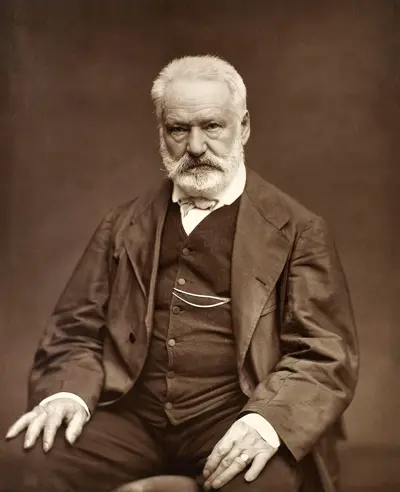
Victor-Marie Hugo was a French poet, novelist, and dramatist of the Romantic movement. During a literary career that spanned more than sixty years, he wrote abundantly in an exceptional variety of genres: lyrics, satires, epics, philosophical poems, epigrams, novels, history, critical essays, political speeches, funeral orations, diaries, letters public and private, as well as dramas in verse and prose.
