Greg Grandin Quotes
At issue when professional sports teams take the name of Native Americans is the problem of mimicry: having appropriated the land and wealth of America's vanquished peoples, settler culture then appropriates the supposed values and spirit of the vanquished as well.
Grandin, Greg. The End of the Myth: From the Frontier to the Border Wall in the Mind of America. Metropolitan Books, 2019.


To many, this quotation is shocking. TR was a presidential pioneer in race relations being the first President to ever invite a Black to dine at the White House. See {588996} for his views on Blacks. Although modern and liberal with respect to most minorities, TR had a major blind spot regarding Native Americans and was among the worst racists.


This quotation is often used as the greatest evidence the white usurpation of Indian land and the dubious value of all the treaties that had been made with the Indians guaranteeing them specific lands. Jackson, however, was not completely accurate. The Iroquois who fought on the American side in the Revolution were still on their lands in New York State. However, the Iriquois had their dealings with the State and local governments, and fared better than those tribes that depended in the Federal Government—especially with racists like Jackson in the Presidency.

Wayne played so many parts depicting whites in the process of expanding Westward that many people saw him as an expert on the history of the Westward Expansion. He did not comment on the whites who then kept huge ranches “selfishly” for themselves or those who selfishly would not share the mineral rich land that they had taken with anyone including the original Indian owners. So in this view, the Indians should have not been capitalists but they should have been socialists and shared their resources.

Samuel Langhorne Clemens, 1835-1910. Twain was one of the few whites who realized that success in assimilating American Indians would destroy their culture and identity. Even today, whites and Indians alike constantly debate the desirability of assimilation policies and supporting independent reservations.


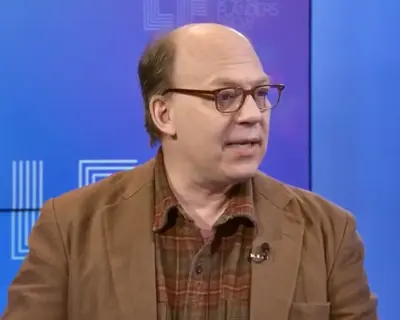
Greg Grandin (born 1962) is a professor of history at Yale University. He previously taught at New York University. He is author of a number of books, including Fordlândia: The Rise and Fall of Henry Ford's Forgotten Jungle City, which was a finalist for the Pulitzer Prize for History, as well as for the National Book Award and a National Book Critics Circle Award. A more recent book, entitled, Who Is Rigoberta Menchú?, focuses on the treatment of the Guatemalan Nobel Peace Prize winner. His 2014 book, The Empire of Necessity: Slavery, Freedom, and Deception in the New World, is a study of the factual basis for the novella Benito Cereno by Herman Melville.
