Carlos Fuentes Quotes
Like all of Latin America, Mexico after independence in 1821 turned its back on a triple heritage: on the Spanish heritage, because we were newly liberated colonies, and on our Indian and black heritages, because we considered them backward and barbaric. We looked towards France, England and the U.S., to become progressive democratic republics.
Fuentes, Carlos. The Buried Mirror: Reflections on Spain and the New World. Houghton Mifflin, 1992.


Samuel Langhorne Clemens, 1835-1910. Twain was one of the few whites who realized that success in assimilating American Indians would destroy their culture and identity. Even today, whites and Indians alike constantly debate the desirability of assimilation policies and supporting independent reservations.


No one at the time knew the answer to the question but we do today. The colonial whites brought small pox with them to the new world. The whites had many generations of building immunity to small pox so that only a small percentage of whites who contracted the disease would die. The Indians, however, had never before been in contact with small pox and their immune. Their systems had not had the time to evolve resistance to the disease. The same thing occurred with the Spanish conquistadors and the native people in Central and South America only the percentage of death was much higher than the Indians of North America—possibly due to more sexual and other interpersonal contact, possibly climate, and possibly the North American Indians were better nourished and generally healthier to better withstand the disease which wiped out the vast majority of the Indians of Central and South America.
The graphic is the famous Benjamin West painting of the treaty signing between the Lenape Indians and William Penn in 1686. Tenoughan was one of the Indians depicted at the signing but we do not know which one.


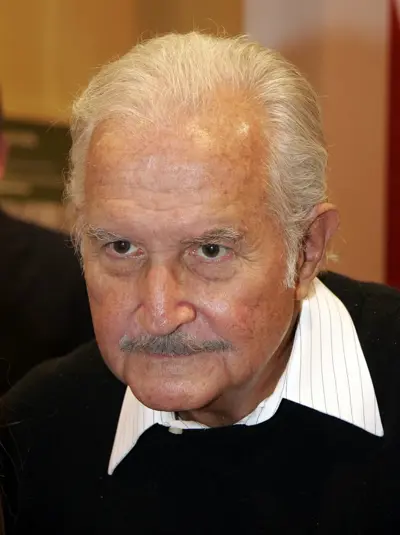
Carlos Fuentes Macías was a Mexican novelist and essayist. Among his works are The Death of Artemio Cruz (1962), Aura (1962), Terra Nostra (1975), The Old Gringo (1985) and Christopher Unborn (1987). In his obituary, The New York Times described Fuentes as "one of the most admired writers in the Spanish-speaking world" and an important influence on the Latin American Boom, the "explosion of Latin American literature in the 1960s and '70s", while The Guardian called him "Mexico's most celebrated novelist". His many literary honors include the Miguel de Cervantes Prize as well as Mexico's highest award, the Belisario Domínguez Medal of Honor (1999). He was often named as a likely candidate for the Nobel Prize in Literature, though he never won.
