Gustav Stresemann Quotes
As a result of the World War, this old Germany collapsed. It collapsed in its constitution, in its social order, in its economic structure. Its thinking and feeling changed.
Stresemann, Gustav. "The New Germany." Nobel Lectures, Peace 1926-1950, edited by Frederick W. Haberman, Elsevier Publishing Company, 1972.


Germany had just attacked Russia with whom it had a treaty. For a while, Hitler paid little attention to Italy and just gave their “ally” orders and instructions. Italian public opinion was concerned about the same question. See {627973} .

The Times regretted that the Germans did not speak to the Austrians more vigorously when they were threatening to attack Serbia who harbored anti-Austro-Hungarian terrorists (see {642085}). What the Times editors did not realize was that the Germans had already made their war plans (see {642092}) and the Serbian issue was just the justification they needed to implement them. So there was no real reason for the Germans to discourage the Austro-Hungarian Empire from its mission to punish Serbia.


1914 was the outbreak of WWI in which all the belligerents had very different interests and reasons for war—even allies on the same side greatly differed as to their motivation for fighting.

The “Great War” was a term then used for the First World War. He actually understated the effect on the generations. It affected more than two.

stating that war was obsolete See {640087} for the quotation of exactly what Angell wrote.

Note that he assumes that not only will there be another World War, but he assumes that we will be on opposite sides.

The Ambassador of Bavaria represented an area where the politicians saw democrats and socialists as their great enemy, as did many of the leading right wing conservatives in all of Germany. They believed that a great war would give them a chance to crush democratic socialism in Europe. Bethmann warned that just the opposite might result, and indeed it did. He was correct. Many of the crowned heads of Europe were deposed and the democratic socialists emerged as a major political factor in the victorious democracies. Bethmann-Hollweg, however, was not a strong leader and could not prevent the Conservatives, the military leaders, and Kaiser Wilhelm from initiating WWI.


See the American ambassador’s assessment after the war began {41089}
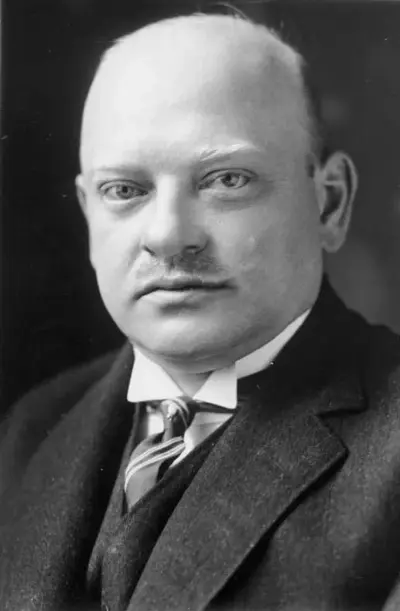
Gustav Ernst Stresemann was a German statesman who served as chancellor in 1923 (for 102 days) and as foreign minister from 1923 to 1929, during the Weimar Republic.
