Mark Twain Quotes
America cannot have an empire abroad and a Republic at home.
Twain, Mark. Mark Twain's Speeches. Harper & Brothers, 1910.

The French Revolution was out of control and terribly bloody. Most Americans and even English who supported the principles and reasons for the French revolution ceased their support because of the Reign of Terror. Jefferson, however, saw a link between France and American democracy and was reluctant to end support.


The words “extensive empire” imply that Jefferson who doubled the size of the United States with the Louisiana Purchase was thinking of a nation that spanned the continent and was happy with the fact that the Constitution did not obstruct the addition of additional states and territories.

President Benjamin Harrison and Congress proclaimed that October 31, 1892 be a national celebration of the 400th Anniversary of Columbus landing in America. Bellamy represented a juvenile weekly publication and was named chairman of the committee to conduct the celebration. A first draft of the pledge was written by James B. Upham, a staff member of the publication. The words "under God" were added in 1952 by an Act of Congress. The original had “to my flag.” The pledge was first used publicly at the Chicago World’s Fair on October 21, 1892. It was not endorsed by Congress until 1942. It is officially recognized as law in 36 United State Code 172.


Ataturk was one of the few revolutionary leaders who appreciated the importance of maintaining a Republic over time and allowed for the possibility that the revolutionary government might become corrupt. So like Thomas Jefferson, he always told citizens to be ever vigilant. In the case of Turkey, on several occasions fundamentalist religious forces have attempted to regain control of the secular republic and the government and mindful of Ataturk’s warnings the Army and other forces have rallied to keep Turkey independent and secular.

There are some who have argued that the United States 20th century of world dominance was an empire. Perhaps so, but it did not have most of the characteristics that Thucydides and most others thought of as characteristics of empire—occupation of nations, rule by the Imperial country, privilege in other nations of the Empire, control. Most important, in historical empires, money—in the form of taxes or goods was commandeered by the Empire for the mother country. The US taxed no one, and money flowed the other way in the most generous sharing of foreign aid in human history. The United States had great influence and was able to exert economic and sometimes military pressure on many nations of the world; American culture was adopted by many nations, but America rarely behaved as Empires historically did.

The final decision regarding the attack on Pearl Harbor and war with America had to be made. The Emperor Hirohito, Prime Minister Tojo, the full cabinet and leading elder statesmen were invited. Hara attended as one of the latter class. America had instituted an embargo of critical raw material whose end was contingent of Japan withdrawing from the territory that they had invaded and stop their territorial aggression in Asia, an aggression which some Japanese leaders—notably the military—was absolutely necessary to provide for the growing Japanese population and its increasing standard of living. At the time, an embargo was a powerfully effective weapon, which left Japan only two choices: Withdrawal or War. In modern times nations have chosen to endure and evade embargoes rather than be forced into undesirable positions.


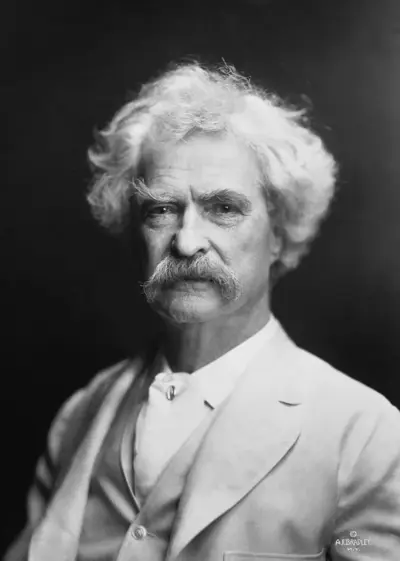
Samuel Langhorne Clemens, known by his pen name Mark Twain, was an American writer, humorist, entrepreneur, publisher, and lecturer. He was lauded as the "greatest humorist the United States has produced," and William Faulkner called him "the father of American literature". His novels include The Adventures of Tom Sawyer (1876) and its sequel, the Adventures of Huckleberry Finn (1884), the latter often called "The Great American Novel".
