Tom Coburn Quotes
All the Congressmen who know nothing about the subject are telling the scientists how to do their research and what kinds to do.
Coburn advocated Congress appropriating money for research and then staying out of the details of how the research is conducted and which scientific or medical problems are researched.
Tom Coburn, U. S. Congressman & Senator (Republican, OK, Town Meeting, Tulsa Community College, August 16, 2011
Sourced by: Eigen's Political and Historical Quotations


She was referring to scientists who might have personal moral judgments regarding a scientific issue like embryos, stem cells, and abortion or animal experiments that are different from that of the government at the time, might have their job threatened if they refused to personally perform a procedure that was offensive to them.

This was in 1945 where the number of research studies published each month was large compared to the past but a tiny fraction of what it would be just 50 years later.

By “arts” Jefferson meant the mechanical arts—inventions and engineering. Jefferson Extrapolated the science and technology progress at the time to the future in a way that few others did at that time.

The vast majority of public funding for science is decided upon by peer review by scientists themselves. The government officials do not make most of the decisions. They rely on panels of scientists. The reason some of Venter’s early ideas were not funded was that the majority of scientists did not think Venter’s research was a good bet. Venter however is one of those scientists whose ideas have been very unorthodox and his great strength is that he does attack problems in unusual ways and he has had a number of major scientific breakthroughs. Venter is very persuasive and has found it easier to convince businessmen to fund him than the scientists who sit on the government science panels. However, American government money has funded many of the major breakthrough’s of our society including, manufacturing with interchangeable parts, railroads, the telegraph, computers, atomic energy, and the Internet.


Von Braun never really did any basic research, and although a brilliant engineer and technologist who was instrumental in rocket development, he never made any contribution to science. Basic research has the greatest long term benefit and effect on human knowledge and standard of living, but applied science can have more short range utility.


President Andrew Johnson had been impeached by the House of Representatives and was being tried in by the Senate. A majority of the Senators voted for conviction but the vote was 1 short of the two-thirds that were needed. Johnson remained in office. These were two of the charges against Johnson. A Century later Presidents commonly did both of these. George W. Bush made reappointment of Senate rejected nominees into an art form but after the Johnson trial, these were never to be considered reasons for impeachment again.

Tesla was one of the great American immigrant scientists. He found in America the kind of intellectual and operational freedom that did not exist in the rigid, monarch-controlled, Austro-Hungarian Empire. He developed patents and techniques that formed the technological bases of radio, telephone long distance, TV, cell phones, Wi Fi, just to name a few. Most important he was Thomas Edison’s great nemesis. Edison invented DC electric generators that could power factories or entire streets in a neighborhood. Tesler invented and developed AC electrical technology which could power entire cities and he could move electricity over long distances which Edison could not. Tesler was one of the first scientists to conceive of and try to implement “Big Science” where there were huge capital investments to develop machines and systems to do what had never been done before—philosophically like the CERN Hadron Collider. Tesler even convinced a large corporation to finance the construction of a massive building and tower so he could experiment with the wireless transmission of electricity. However, as the industrial democracies have learned, Big Science can only be funded by governments and it often takes sever working in consort to afford the huge investment that is required. In Tesler’s era, the federal and state governments did not fund scientific research so his work was not only technically ahead of his time but also conceptually. He anticipated most of the problems and need for a national power grid that was challenging America even at the beginning of the 21st century.
Many of his greatest ideas were not sufficiently appreciated by many other scientists nor the businessmen who funded scientific projects then. Tesla was one of the great American immigrant scientists. He found in America the kind of intellectual and operational freedom that did not exist in the rigid, monarch-controlled, Austro-Hungarian Empire. He developed patents and techniques that formed the technological bases of radio, telephone long distance, TV, cell phones, Wi Fi, just to name a few. Most important he was Thomas Edison’s great nemesis. Edison invented DC electric generators that could power factories or entire streets in a neighborhood. Tesler invented and developed AC electrical technology which could power entire cities and he could move electricity over long distances which Edison could not. Tesler was one of the first scientists to conceive of and try to implement “Big Science” where there were huge capital investments to develop machines and systems to do what had never been done before—philosophically like the CERN Hadron Collider. Tesler even convinced a large corporation to finance the construction of a massive building and tower so he could experiment with the wireless transmission of electricity. However, as the industrial democracies have learned, Big Science can only be funded by governments and it often takes sever working in consort to afford the huge investment that is required. In Tesler’s era, the federal and state governments did not fund scientific research so his work was not only technically ahead of his time but also conceptually. He anticipated most of the problems and need for a national power grid that was challenging America even at the beginning of the 21st century.


Most scientists do not have the skill or the totality of knowledge to accurately predict the effect of scientific research and learning on society. Many are not interested. Those who try to communicate with politicians and the public are usually met with indifference or suspicion. Above all, the scientific and mathematical literacy of the public is so weak, that it is impossible in much of science to even explain the science to the lay public much less explain its implications. Soddy was a bit of an idealist from a class society and he felt the upper classes should be better informed by scientists.

See Hans Bethe {628530} for a practical implication of this principle.

Canute was a Scandinavian king who tried to control the ocean tides to show his power. In this particular case, the court ruled that new life forms could be patented.


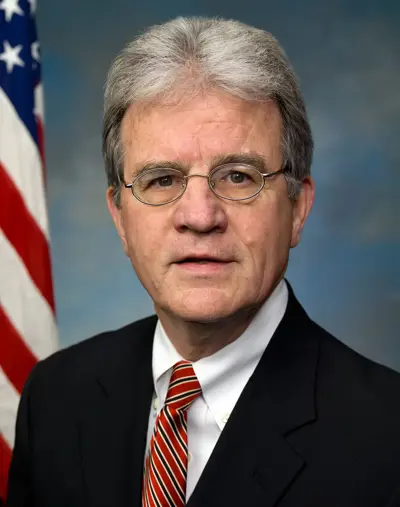
Thomas Allen Coburn was an American politician and physician. A Republican, he was a United States Representative and later the junior United States Senator from Oklahoma.
