Craig Venter Quotes
Almost every scientific breakthrough I have ever been associated with was funded with private money. Once we could show it worked, we could get all the government money we wanted.
The vast majority of public funding for science is decided upon by peer review by scientists themselves. The government officials do not make most of the decisions. They rely on panels of scientists. The reason some of Venter’s early ideas were not funded was that the majority of scientists did not think Venter’s research was a good bet. Venter however is one of those scientists whose ideas have been very unorthodox and his great strength is that he does attack problems in unusual ways and he has had a number of major scientific breakthroughs. Venter is very persuasive and has found it easier to convince businessmen to fund him than the scientists who sit on the government science panels. However, American government money has funded many of the major breakthrough’s of our society including, manufacturing with interchangeable parts, railroads, the telegraph, computers, atomic energy, and the Internet.
Craig Venter, Biologist and Businessman, Statement, November 2010, Interview, CBS 60 Minutes, November 21, 2010
Sourced by: Eigen's Political and Historical Quotations


At the time, the public investment in science was just exploded as a result of the Manhattan Project, the effort that researched and built the first atomic bomb. By the end of the 20th century, a period of a little more than 50 years science research was funded in the billions of dollars and even correcting for inflation, the investment (Federal, State, and Local) had multiplied many fold.

This is why the American Government has played such a major role in most of the great technologies in American History. Interchangable Parts (A federal contract with Eli Whitney), Canal Construction (New York State built the Erie Canal), the Railroad (federal government gave hugh tracts of land to build the rail lines to the West), the Telegraph (No one would use it until the government financed the experiment to prove it by creating a line between Baltimore and Washington), AC Electricity, there the city of Rochester NY hired Tessler and Westinghouse to Demonstrate Generating Electricity at Niagra Falls and transmitting it over 20 miles which Edison’s Direct Current could not do), immunization (the Army Medical Corps gave the first grants to universities to develop the science of vaccines and immunization, the computer (in WWII the U. S. financed the development of computers sent to England to implement Turing’s breaking of the German “unbreakable” code), atiomic energy (the Manhattan Project—the largest scientific endeavor the world has known), the Internet (Developed with long term research funds for DARPA the future technology research arm of the Defense Department. American investors and businesspeople took each of these and developed them but the initial steps, when no capitalist dared risk on such basic and futureistic efforts were taken by American Government which probably could never have developed these technologies but the private sector could not do it with government in the role Moritz herein describes.


While the President had total faith in American scientists, at the time the state of American physics was not world class in several key areas. Oppenheimer, was for example, the ONLY senior American theoretical physicist at the outbreak of the war, and he had been trained in Germany. What the President did not quite realize was how many of the key scientific positions on the Manhattan Project were foreign refugees who had fled the Nazis in Europe. Many American scientists and engineers did not want to go to Los Alamos where they could not leave for the duration of the war, had to give up their own personal research, and whose relatives who did not accompany them would never know where they were or what they were doing. But there were enough great American scientists who Oppenheimer recruited that combined with the Europeans formed the greatest and most effective concentration of scientific manpower working in history.

Stem cells are cells of the body that transform into all other cells as needed. Embryonic stem cells are the ones most easily transformed to create other needed cells. There was and is a large supply of embryonic stem cells but religious abortion opponents were concerned that if there were enough success there would be a market for fetal stem cells which would encourage some women to have abortions so that they could sell the embryonic stem cells. President Bush, to placate his religious right wing, had banned federal funds being used for fetal stem cell research. President Obama, who had campaigned on this issue and been elected, then overturned the ban with this quote.

This quotation is important because it illustrates the important research and development role that the Government has played for the most important technological innovations of the second half of the 20th century. Even though most of the computer breakthroughs were developed by private companies, the government paid for most of the R&D and purchased the vast majority of the first computers on the market when private companies had not yet realized the value of computers and with the exception of IBM most of the private sector would invest no money in this unproven technology. This was the same as the telegraph, the railroads and others before and the Internet and more afterward.


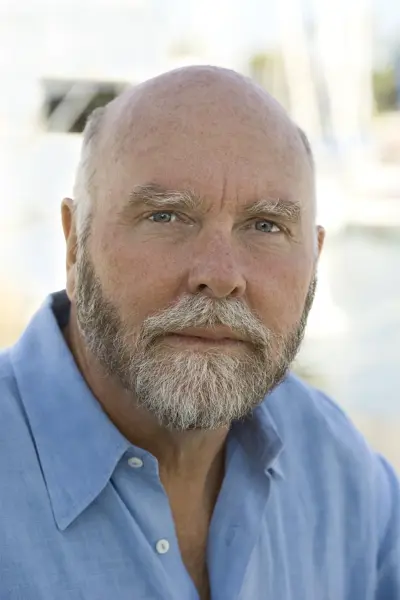
John Craig Venter is an American biotechnologist and businessman. He is known for leading the first draft sequence of the human genome and assembled the first team to transfect a cell with a synthetic chromosome. Venter founded Celera Genomics, The Institute for Genomic Research (TIGR) and the J. Craig Venter Institute (JCVI), where he currently serves as CEO. He was the co-founder of Human Longevity Inc. and Synthetic Genomics. He was listed on Time magazine's 2007 and 2008 Time 100 list of the most influential people in the world. In 2010, the British magazine New Statesman listed Craig Venter at 14th in the list of "The World's 50 Most Influential Figures 2010". In 2012, Venter was honored with Dan David Prize for his contribution to genome research. He was elected to the American Philosophical Society in 2013. He is a member of the USA Science and Engineering Festival's Advisory Board.
