David Ricardo Quotes
After all the fertile land in the immediate neighbourhood of the first settlers were cultivated, if capital and population increased, more food would be required, and it could only be procured from land not so advantageously situated.
Ricardo, David. On the Principles of Political Economy, and Taxation. John Murray, 1817, p. 60.


Use included renting it. What he opposed was simply holding land when whites were driving Indians off their lands because all the unused land outside of the reservation was owned by someone and the asking price was very high. Ingersoll was considered to be the greatest orator and political thinker of his day, but his overt atheistic views curtailed his elected political career.

This was a tragic prediction for some as it was used as a theoretical reason for little intervention in the Irish famine a few decades later. The then population density is exceeded by many countries today.


The Depression had 25% unemployment and many people lacked even food to eat. Meanwhile, there was a huge amount of unused, idle land in California.


While Turgot was right about so much, this was one of his big errors—the assumption that land was fundamental to and necessary for, wealth. In many countries it is still true, but of the recent billionaires like Warren Buffet, Bill Gates, Carlos Slim and most others, they own very little land. In the United States and Canada, there are large tracts of land that few or no one will buy and a cast majority of people do not make their living from land.

The word “proprietor” at the time meant someone who had title to land. The title was then almost always tied up with the aristocratic titles. “Great proprietors” were therefore nobles who owned and controlled large land holdings. The “improvers” tended to be the businessmen—especially the manufacturers and the transportation magnates. Large landowners could just make money by renting parts of their land to tenant farmers. They needed no capital, no vision, not much skill or talent, and they didn’t have to take any risks.

From a technical and production point of view, there is no practical limit to population size that is imposed by food production. We can produce sufficient food for the world even if population increases dramatically. None the less, even today we have some starvation and much malnutrition problems. These however are political, economic and tend to be distributional. We can produce the food. Morris does NOT advocate large population growth. Although food need not be a problem with an expanding population, job availability, medical care, energy, land, natural resources, ethnic hatred, migration, violence, and other problems are produced by population growth.


This statement was quite controversial when it was published and remains so. Many libertarians and private sector enthusiasts see giving this power to government is too much and erodes the sanctity of private property. Nonetheless, most local and state government in America subscribes to this point of view thus allowing zoning, city planning, condemnation of private property for public use and the like. In 1976 when it was promulgated, President Ronald Reagan discussed it in his weekly radio address.
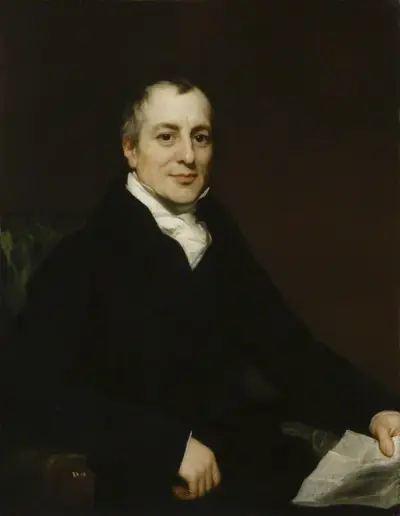
David Ricardo was a British political economist, one of the most influential of the classical economists along with Thomas Malthus, Adam Smith and James Mill. He was also a politician, and a member of the Parliament of Great Britain and Ireland.
