Ralph E. Flanders Quotes
[A] Senator who wants to stir up trouble ... can do so by introducing on the floor amendments which he was duty bound to present in committee. But presentation in committee makes no headlines.
Ralph E. Flanders, 1880-1970, U.S. Senator (Republican, VT), Autobiography
Sourced by: Eigen's Political and Historical Quotations


They were discussing the Civil Right Bill of 1964 which they all wanted to pass. See {605438} . However, they faced a filibuster from the Southern Senators who had always before used this tactic and blocked Civil Rights legislation. However, the President here committed himself to the one way to take most of the power out of the filibuster. Accept a shutdown of the Senate, give up the rest of the President’s legislative program but the filibuster blocks all legislation that the Southerners wanted like cotton and tobacco subsidies.


In the early days of the Senate Filibuster, a senator could hold the floor (and halt all actions) as long as he could continue to speak or 3/5 of the Senate voted to end the filibuster. The filibuster imposed a physical burden on the Senator who chose to use it. Likewise, the other Senators had to be present in sufficient numbers to have a quorum, else the Filibusterer would be able to rest at he did not have to continue to speak if there was not a quorum. The Senate rules were changed to allow a Senator to “announce” a filibuster of a bill, and all action on that bill would stop but there was no burden on the filibustering senator or other senators who had to form the quorum. But in the 112th Congress, the Republicans resorted to more filibusters than there had been in the entire previous history of the Senate and Nelson wanted to return to the old requirement of holding the floor physically.

The senator had broken with his own party on the issue of slavery in the territories.


The House, under the control of the majority leadership, does not have to be very efficient or reasonable with respect to its own procedures. Leaderships of both parties care little of their caucus members read the legislation or not so long as they vote the party line as instructed by the leadership.

The bills and legislative processes in Congress had become so large and convoluted that literally members of Congress either voted on bills that were so lage that they rarely read the entire bill or on procedures so arcane that the members could not determine ehate they were voting for. As a result most just followed the lead of their party's Congrssional Leadership.


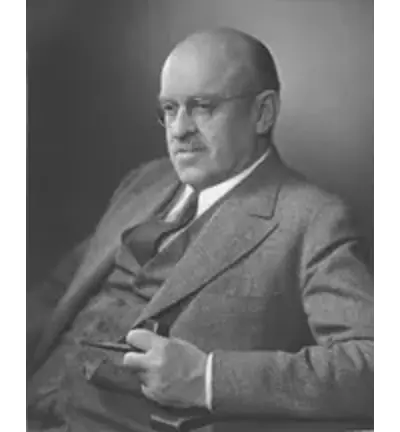
Ralph Edward Flanders was an American mechanical engineer, industrialist and politician who served as a Republican U.S. Senator from the state of Vermont. He grew up on subsistence farms in Vermont and Rhode Island and was an apprentice machinist and draftsman before training as a mechanical engineer. He spent five years in New York City as an editor for a machine tool magazine. After moving back to Vermont, he managed and then became president of a successful machine tool company. Flanders used his experience as an industrialist to advise state and national commissions in Vermont, New England and Washington, D.C. on industrial and economic policy. He was president of the Boston Federal Reserve Bank for two years before being elected U.S. Senator from Vermont.
