Harry F. Byrd Quotes
If you know an amendment [you are opposed to] will pass you don't want a roll call [vote] because that makes it [the amendment] harder to drop in conference.
Harry F. Byrd, Jr., U. S. Senator (Democrat & Independent, VA), 1965, Quoted in Manley, The Politics of Finance, Little Brown, 1970
Sourced by: Eigen's Political and Historical Quotations


He was commenting to a simple, minimal, bipartisan bill he had cosponsored to provide justice and fairness to the "dreamer" immigrants.


The House, under the control of the majority leadership, does not have to be very efficient or reasonable with respect to its own procedures. Leaderships of both parties care little of their caucus members read the legislation or not so long as they vote the party line as instructed by the leadership.

In the early days of the Senate Filibuster, a senator could hold the floor (and halt all actions) as long as he could continue to speak or 3/5 of the Senate voted to end the filibuster. The filibuster imposed a physical burden on the Senator who chose to use it. Likewise, the other Senators had to be present in sufficient numbers to have a quorum, else the Filibusterer would be able to rest at he did not have to continue to speak if there was not a quorum. The Senate rules were changed to allow a Senator to “announce” a filibuster of a bill, and all action on that bill would stop but there was no burden on the filibustering senator or other senators who had to form the quorum. But in the 112th Congress, the Republicans resorted to more filibusters than there had been in the entire previous history of the Senate and Nelson wanted to return to the old requirement of holding the floor physically.

Things were difficult then, but no where near as bad as in 2008-2012 period where the minority Republicans had more filibusters than all other Senates since the nation began, and their stated purpose was to be sure that no legislation could pass for which President Barack Obama might get credit.

The senator sees examples of the filibuster in ancient Rome.

The speaker was having trouble with some of his own party members in passing the President's budget. The press wanted to know when he would bring the budget to a vote.
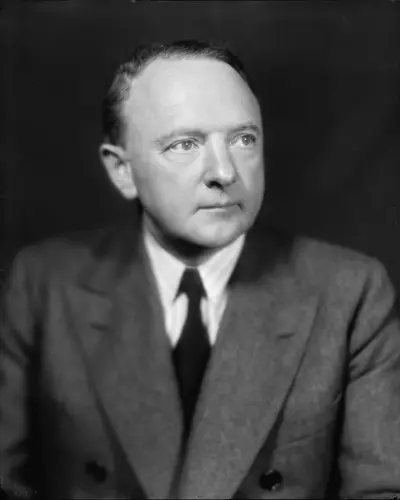
Harry Flood Byrd Sr. was an American newspaper publisher, politician, and leader of the Democratic Party in Virginia for four decades as head of a political faction that became known as the Byrd Organization. Byrd served as Virginia's governor from 1926 until 1930, then represented it as a United States Senator from 1933 until 1965. He came to lead the "conservative coalition" in the United States Senate, and opposed President Franklin D. Roosevelt, largely blocking most liberal legislation after 1937. His son Harry Jr. succeeded him as U.S. Senator, but ran as an Independent following the decline of the Byrd Organization.
