John L. DeWitt Quotes
A Jap’s a Jap. It makes no difference whether he is an American citizen or not. I don’t want any of them ...
This racist officer was the impetus for one of the terrible wrongs in American history but most of the national establishment and FDR himself signed off on it to his everlasting disgrace. See {587961} and {635792}.
John L. DeWitt, 1880-1962, Army General in charge of the defense of the Western part of the United States, Explanation of why the West Coast Japanese were rounded up and kept in camps during WWII
Sourced by: Eigen's Political and Historical Quotations

This report was submitted to President Franklin D. Roosevelt, who accepted the recommendation and signed Executive Order 9066. The Japanese on the West Coast were then rounded up and interned by DeWitt in what was one of the lowest and disgraceful points in American history. A national apology was made 34 years later. See {635792}.
This report was submitted to President Franklin D. Roosevelt, who accepted the recommendation and signed Executive Order 9066. The Japanese on the West Coast were then rounded up and interned by DeWitt in what was one of the lowest and disgraceful points in American history. A national apology was made 34 years later. See {635792}. One of the aspects of the case that made it so disgraceful is that these facts that a senior General attested to the President were not true. And tragically, the General was aware of that fact when he made his aware of the risk than he, so be it. The reality was that the FBI and the Signal Corps had investigated these charges and found that there was not a singe case of sabotage by American Citizens of Japanese origin and there were no cases of signals to the Japanese. Some garbled radio report and recommendations. However, he was an inveterate racist and believed that the Japanese American citizens could not be trusted, and if some eggazeration was needed to convince people less messages were traced to American military trainees under De Witt’s command who while in training had send messages that were not decipherable. For examples of De Witt’s racism. See {587961}. and {587962}.

The Proclamation was a belated admission of the disgraceful internment of loyal Japanese Americans during WWII. See {587961}. “Evacuation” was the euphemism for rounding up Japanese American citizens and putting them in internment camps. Not a single Japanese American was involved in any effort to sabotage or undermine the United States. The same cannot be said about the German Americans where a few did work against U. S. interests and yet the German-Americans were never rounded up. The explanation of the difference has been long debated. Racism was a part of it; California paranoia, another. And unfortunately, Japanese Americans owned very desirable land in California and when they could no longer make their payments some interests gobbled up the land and that was a motivation for some. Regardless, it was one of the low points in American history, and warranted this Presidential and national apology.


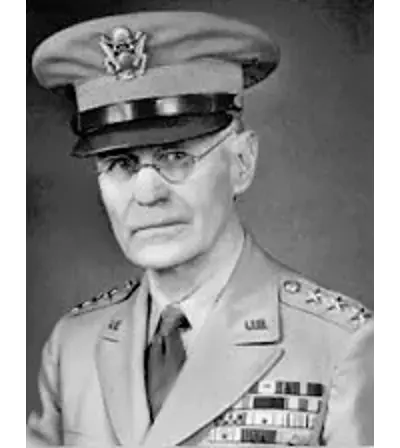
John Lesesne DeWitt was a general officer in the United States Army, best known for his vocal support of the internment of Japanese-Americans during World War II.
