John L. DeWitt Quotes
A Jap is a Jap. It makes no difference whether the Japanese is theoretically a citizen. He is still a Japanese. Giving him a scrap of paper won't change it.
Initially when the World War II idea of evacuating Japanese Americans from the West Coast was proposed, General De Witt and replied, “Damned nonsense!”
John L. De Witt, 1880-1962, General, U.S. Army (West Defense Command), Remark regarding the internment of Japanese American citizens, 1942
Sourced by: Eigen's Political and Historical Quotations

This racist officer was the impetus for one of the terrible wrongs in American history but most of the national establishment and FDR himself signed off on it to his everlasting disgrace. See {587961} and {635792}.

This statement shortly after the Japanese attacked Pearl Harbor, was remarkably prescient. The last sentence was exactly what happened although at the time some criticized him for being too paranoid about racial matters.
This report was submitted to President Franklin D. Roosevelt, who accepted the recommendation and signed Executive Order 9066. The Japanese on the West Coast were then rounded up and interned by DeWitt in what was one of the lowest and disgraceful points in American history. A national apology was made 34 years later. See {635792}.


To many, this quotation is shocking. TR was a presidential pioneer in race relations being the first President to ever invite a Black to dine at the White House. See {588996} for his views on Blacks. Although modern and liberal with respect to most minorities, TR had a major blind spot regarding Native Americans and was among the worst racists.


Disraeli was the 1st Earl of Beaconsfield

Shortly after the Japanese attack on Pearl Harbor:

Miller, along with the Attorneys General and Governors of the 10 western states, were meeting with Milton Eisenhower to discuss relocating west coast Americans of Japanese ancestry in the inland states during World War II. Eisenhower then resigned as the first director of the War Relocation Authority.


Nationalism produced negative effects on the society ranging from aggression, ethnic cleansing, war and hatred.

The Turks had massacred the vast majority of their Armenian population, and treated the Greeks badly killing and them many of them from territories the Ottoman Turks had conquered. Jews fared better but were 2nd class citizens. Bristol was the American State Department’s senior official and was very “understanding” of the murders and ethnic cleansing despite the fact that President Wilson and most American politicians were very opposed to the Turkish massacres. See {620614} and {620599} . Two factors makes this quotation very significant. First, at the time the State Department was not really under the control of either the President or the Congress. It was not rare for the Department to have its own policies and implement them. This began to change in WWII and FDR exercised much more control than previous presidents since Theodore Roosevelt. The second factor is that there were many racists throughout the State Department—Bristol was only one. There was little concern for minorities’ welfare and the emphasis was on commerce. See {620600} Even in Truman’s administration, the President had massive opposition from the State Department for his policy of recognizing the State of Israel. Today, this kind of racism in the State Department is very rare, and human rights has been one of their major concerns. There were many changes in 75 years.


The Proclamation was a belated admission of the disgraceful internment of loyal Japanese Americans during WWII. See {587961}. “Evacuation” was the euphemism for rounding up Japanese American citizens and putting them in internment camps. Not a single Japanese American was involved in any effort to sabotage or undermine the United States. The same cannot be said about the German Americans where a few did work against U. S. interests and yet the German-Americans were never rounded up. The explanation of the difference has been long debated. Racism was a part of it; California paranoia, another. And unfortunately, Japanese Americans owned very desirable land in California and when they could no longer make their payments some interests gobbled up the land and that was a motivation for some. Regardless, it was one of the low points in American history, and warranted this Presidential and national apology.

This is an excellent example of the kind of rhetoric that was used against the Japanese immigrants to America in the 1930s. There was a rumor that the Japanese laborer, in addition to working for less wages what white labor were getting, was a spy for the Japanese Emperor, It was this kind of prejudice and conspiracy theory that led the government to intern Japanese—even citizens on the West Coast—an act that was ignominiously upheld but he Supreme Court and latter apologized for by several American presidents. It turned out that there was not a single Japanese immigrant who engaged in any kind of spying or sabotage in WWII and many fought in the Armed forces and were amongst the most decorated soldiers. One irony of the West Cast internment is that Japanese immigrants and American citizens living on the East cost were no so interned. The fear of invasion was not as great and the history of anti Japanese prejudice as in this quotation was not as prevalent. There are some historians who argue that one of the major motivations of to intern the Japanese was for some wealthy whites to be able to get their land—especially farmland—which since they could not work, they could not pay the taxes and a huge amount of prime land changed hands as a result of the internment.
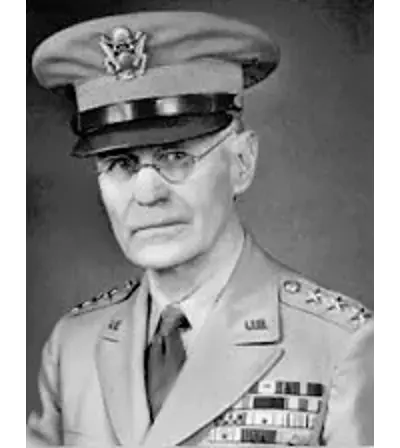
John Lesesne DeWitt was a general officer in the United States Army, best known for his vocal support of the internment of Japanese-Americans during World War II.
