Robert Rogers Quotes
1. Don't forget nothing. 2. Have your musket clean as a whistle, hatchet scoured, sixty rounds powder and ball, and be ready to march at a minute's warning. 3. When you're on the march, act the way you would if you was sneaking up on a deer. See the enemy first. 4. Tell the truth about what you see and do. There is an army depending on us for correct information. You can lie all you please when you tell other folks about the Rangers, but don't never lie to a Ranger or officer. 5. Don't never take a chance you don't have to. 6. When we're on the march we march single file, far enough apart so one shot can't go through two men. 7. If we strike swamps, or soft ground, we spread out abreast, so it's hard to track us. 8. When we march, we keep moving til dark, so as to give the enemy the least possible chance at us. 9. When we camp, half the party stays awake while the other half sleeps. 10. If we take prisoners, we keep 'em separate til we have had time to examine them, so they can't cook up a story between 'em. 11. Don't ever march home the same way. Take a different route so you won't be ambushed. 12. No matter whether we travel in big parties or little ones, each party has to keep a scout 20 yards ahead, twenty yards on each flank and twenty yards in the rear, so the main body can't be surprised and wiped out. 13. Every night you'll be told where to meet if surrounded by a superior force. 14. Don't sit down to eat without posting sentries. 15. Don't sleep beyond dawn. Dawn's when the French and Indians attack. 16. Don't cross a river by a regular ford. 17. If somebody's trailing you, make a circle, come back onto your own tracks, and ambush the folks that aim to ambush you. 18. Don't stand up when the enemy's coming against you. Kneel down. Hide behind a tree. 19. Let the enemy come till he's almost close enough to touch. Then let him have it and jump out and finish him up with your hatchet.
To this day, American Rangers, as a part of their training, read these orders.
Robert Rogers, 1731-1795, Major & Commander of the first American group of special forces known as ‘Rogers' Rangers’, Standing Orders for American Rangers of the French & Indian War
Sourced by: Eigen's Political and Historical Quotations


Some of the Indian tribes who were allied with the French, raided the farms and settlements of upper New York State, committing many atrocities. Amhurst allowed Rogers Rangers to carry the war to the enemy; the Rangers traveled to St. Francis in Canada and attacked the Indian tribe in their home village, killing all the men, and despite Amhurst’s orders, some of the women. The other women and children were released. This was the first successful American commando raid. Rogers had almost no casualties in the raid, but lost many men to starvation and disease on the long trek home.


Plan Orange was the code name of the united states plan for possible war with Japan. In this ironic quotation, American military planners realized five years before Pearl Harbor that surprise attack was the major vulnerability. We were surprised and had no help from our intelligence service which despite the recommendations was almost nonexistent.

The issue of how to raise an army plagued the Founding Fathers. The State Militias had very short enlistment periods so that as soon as the soldiers had been trained and were effective, their enlistments would be up. Washington and others wanted a draft or at least long enlistment periods in an American Army. The debate which then began has never ended. How much regular Army as opposed to the Army Reserves—the equivalent of the State Militias, whether or not there should be a draft, whether or not an enlistment period may be extended if there is a military need—none of these are new issues but have been with us since the country was founded. See {591369} for more of Washington’s view of this issue.
The issue of how to raise an army plagued the Founding Fathers. The State Militias had very short enlistment periods so that as soon as the soldiers had been trained and were effective, their enlistments would be up. Washington and others wanted a draft or at least long enlistment periods in an American Army. The debate which then began has never ended. How much regular Army as opposed to the Army Reserves—the equivalent of the State Militias, whether or not there should be a draft, whether or not an enlistment period may be extended if there is a military need—none of these are new issues but have been with us since the country was founded. See {591368} for more of Washington’s view of this issue.


While most modern armies treat officers and enlisted men who desert equally or even favor the officers, the Visigoths made desertion by an officer the severest of crimes. A centurion was the officer in charge of 100 men. There were 10 decurians (leaders of 10) under him, They were the modern equivalent of the Sergeants—non-commissioned officers. Their penalty for desertion was only the paying of a heavy fine. It was the officers who had to set the example. This set of laws is the most formalized and sophisticated compendium of laws of the so-called “barbaric peoples” of Europe. The compilation was in many ways a documentation of the traditional laws of the Visigoths that had evolved over hundreds of years.

He was commenting on some of the military disciplinary, logistical, intelligence, and tactical breakdowns that had occurred in the Afghanistan War.

Washington took advantage of the new technology of explosives that had been developed and created an innovative new unit under the command of David Bushnell (1740–1824) the Yale University student who had invented the first time bomb and the Turtle submarine.

Yazid ibn al-Walid ibn 'Abd al-Malik. His concerns were twofold. First, it was difficult to maintain morale of troops in the field for a long period of time. But for him the more important reason was the cost. He cut the military budget by 10 percent which outraged the “hardliners”. It was expensive to keep troops in the field.

See {637854} for a quote on the soundness of our military planning.

Ivan Khrfistoforovich Bagramyan. Most militaries including ours have generally been trained and equipped for the last war and not the next war.

The Marine Corps has not always been the respected service that they have become. On several occasions they were almost disbanded. The compromise was to make them a part of the Navy.
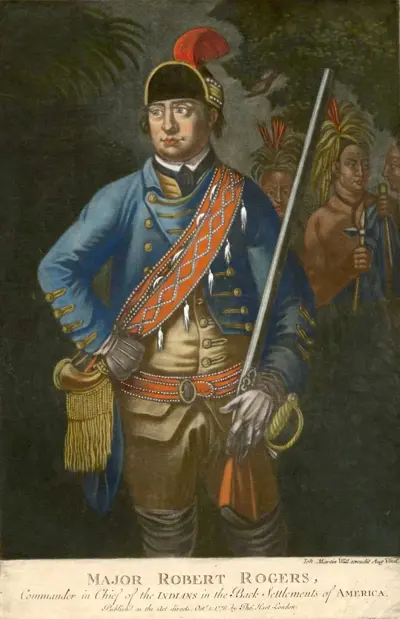
Robert Rogers was an American colonial frontiersman. Rogers served in the British army during both the French and Indian War and the American Revolution. During the French and Indian War, Rogers raised and commanded the famous Rogers' Rangers, trained for raiding and close combat behind enemy lines.
