William Maclay Quotes
… contraband language
Maclay’s use of “contraband” stemmed from the Constitutional clause which read: No title of nobility shall be granted by the United States. Maclay used this clause to argue against John Adams and a few others who wanted titles for the United States executive officers.
William Maclay, 1737-1804, U. S. Senator (Democrat, PA), Expression he used to argue against any titles for American officials, Senate Debate 1789
Sourced by: Eigen's Political and Historical Quotations


In 1871 the congressman refused to serve as chairman of a committee to investigate the Ku Klux Klan. Such pandering to the South was common for politicians who had national aspirtation. If the politican served on such a committee, he would have to aknowledge the existance of the murders, torture, and other criminal activity of an organzation that was very popular in the South. Or he would have to cover up the KKK crimes and lose the support of Northerners. So refusing to serve on the committee was the prudent solution.

Tonga is the last of the Polynesian Kingdoms. The king is very powerful. Under his constitution, some legislators are elected and others are appointed by the king. The latter are in the majority so whatever legislation the king wants is passed and nothing is passed without his approval.


Honore Gabriel Victor Requiti. The French King had just opened the French National Assembly which contained deputies (delegates) from the clergy, the nobility and the people. The King had made what some deputies thought was a very constructive and responsible speech opening the assembly. Mirabeau observed that as long as there was an absolute monarch in place, even a benign one. It was the presence of a monarch itself that was evil.


In this instance Pitt and a few others were arguing against the Stamp Act. They were accused of fomenting rebellion by advocating the same position of the rebellious colonists. Criticism of government policy is often castigated by claiming that enemies of the nation will take aid and comfort by the criticism and be encouraged in their conflict. In this case it was the Stamp Act. In more modern times those members of Congress in America who opposed the Iraq War and wanted withdrawal of U. S. troops were accused of aiding, comforting and encouraging the enemy. It is the favorite tactic of governments under attack for its foreign policy.


as a result of the Watergate hearings and investigations and proceedings


In 1628 Parliament, in response to abuses by King Charles I, was about to pass The Petition of Rights–-a type of Bill of Rights. The King gave assurances that the practices—such as forcing nobles to lend him money—would not continue and didn't want to be embarrassed by passage of a law which he claimed would indicate that the Parliament did not trust him and weaken the dignity of the monarchy. The Petition of Rights passed with Cole’s leadership.


This was written shortly before he assumed the crown.


Arguing against a popular—and large—lower House:


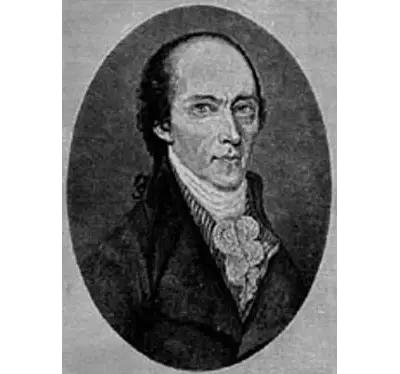
William Maclay was a politician from Pennsylvania during the eighteenth century. Maclay, along with Robert Morris, was a member of Pennsylvania's first two-member delegation to the United States Senate. Following his tenure in the Senate, he served in the Pennsylvania House of Representatives on two occasions, as a county judge, and as a presidential elector. He is known for his journal providing historical information on the 1st United States Congress.
