Thomas Campbell Quotes
Your banner's constellation types White freedom with its stars, But what is the meaning of the stripes? They mean your Negroes' scars.
Thomas Campbell, 1777-1844, Scottish Poet, To the United States of North America, 1838
Sourced by: Eigen's Political and Historical Quotations


Johnson was then Vice President.

This quotation is very interesting historically. Despite the fact that Washington DC was a thoroughly racially segregated city, and the Southern racists controlled much of Congress, Blacks as well as whites were welcome in the Congressional galleries, and they attended many debates. Slavery and equality were not just debated in the 1850s but the issue was in constant friction from the earliest Congress.

This statement was made long after slavery had been abolished and Jim Crow was on the rise in the South.

Christian had just briefed the President about the riots in many cities after the assassination of Martin Luther King. Christian had expressed surprise that the Blacks were so violent.

In the 1930s African Americans who traveled were subject to countless humiliations whenever the sought hotels, rooming houses, restaurants and other accommodations. Gas stations would not allow them to use bathrooms and they were reduced to using open fields. Traveling and vacationing was, for Blacks, humiliating. Wikipedia: “Green reviewed hotels and restaurants that did business with African Americans during the time of Jim Crow laws and racial segregation in the United States. He printed 15,000 copies each year. In the 1930s, Green began his work by compiling data on stores in the New York area that accepted black travelers, and published his first guide in 1936. Similar guides had been published for Jewish travelers, who sometimes faced discrimination. Green's guide was so popular that he immediately began to expand its coverage the next year to other US destinations, adding hotel and restaurants as well.”

Under the previous Republican administrations, virulent and overt racists were not generally appointed especially as they were generally then Democrats. However, when Woodrow Wilson was elected president, he not only appointed many overt racists but he himself may have been one of the most racist Presidents every to inhabit the white House. He fired almost all the Blacks who held positions in the Federal government.

The president was commenting on a Donald Trump campaign statement that African American were in the worst shape in history when the reality was just the opposite


Many believe that the Confederate flag symbolizes bravery and honor in battle, and therefore should be flown even in state government facilities as these are values which our governments hold. And that is true, but the same symbol also connotes, slavery, murder, racism, treason, hate, family destruction, brutality, and torture. Southern whites tend to acknowledge the bravery and honor but ignore the negative symbols. Most other Americans acknowledge the negatives but many tend to ignore the positive virtues.

He was not only an atheist himself, but he was a major opponent of organized religion which he regarded as one or the major initiators and drivers of slavery, segregation and discrimination. For this reason he was critical of Martin Luther King—{583307}. His irreligiosity had always prevented his gaining much support from his fellow African Americans even though a great writer like H. L. Menken considered Schuyler, "the best writer in America".
The first sentence is inscribed on the Jefferson Memorial in Washington DC. The last two sentences are rarely quoted.

Like so many of his other predictions about America, he saw that the evil of racism and slavery was bound to cause the nation to implode. And this was decades before the Civil War, but the problem was inescapable to a critical observer like de Tocqueville.


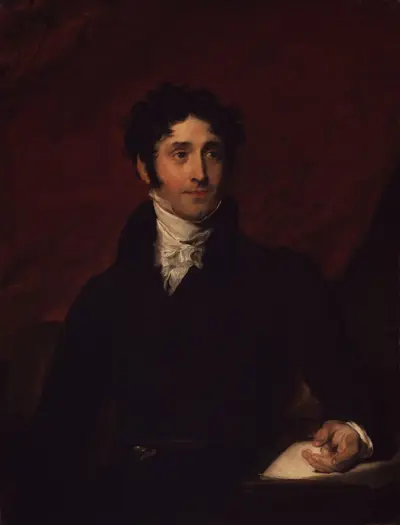
Thomas Campbell was a Scottish poet. He was a founder and the first President of the Clarence Club and a co-founder of the Literary Association of the Friends of Poland; he was also one of the initiators of a plan to found what became University College London. In 1799 he wrote "The Pleasures of Hope", a traditional 18th-century didactic poem in heroic couplets. He also produced several patriotic war songs—"Ye Mariners of England", "The Soldier's Dream", "Hohenlinden" and, in 1801, "The Battle of the Baltic".
