Alan S. Blinder Quotes
You can count on the fingers of one hand, and you don’t need all of them, the number of people who went to jail for the Meltdown of 2008. This is in stark contrast to the Savings and Loan Scandal where 750 miscreants went to jail.
In the Savings & Loan crises there were under 1000 bankers and others who had committed crimes, In the Meltdown of 2008, there were tens of thousands of criminals. Almost everyone connected with home mortgages broke the law, and all of the major banks in America had officers at the highest levels who committed perjury and fraud regarding foreclosure of mortgages. The biggest fish were involved as well as many thousands of others. Wall Street and the financial industry spend many millions in lobbying and campaign donations to be sure that there would be very few prosecutions and even then no major financial leaders would be called to account in a criminal court. The FBI had identified MILLIONS of cases of perjury and fraud in bank forclosures alone.
Alan S. Blinder, Member, White House Council of Economic Advisors, Vice Chairman of the Board of Governors of the Federal Reserve System, Speech, Politics & Prose Bookstore, Washington DC, C-SPAN Book TV, January 28, 2013
Sourced by: Eigen's Political and Historical Quotations

The Senator asked Justice Department officials if the reason that there had been no prosecutions of any major financial figures associated with the Meltdown of 2008 and the Great Recession is that they were “too big to jail.” This appears to be the first public official to use this phrase. See {637991} for the Attorney General’s sad but truthful reply.

At this time it was 6 years after the Home Financing Crisis and the Meltdown of 2008 and despite tens of thousands of law violations by the bank, the Justice Department was finally finishing their investigations and requiring some penalties. Other negotiations with other banks were in progress, but no bank executives were going to jail for the millions they handled fraudulently, whereas a burglar who stole household goods would do jail time.
He was replying to Senator Grassley--{637990}. This quotation is one of the saddest admissions in American law enforcement and corporate regulatory history. A small group of very wealthy men, working for huge financial corporations caused the worst financial crisis since the Great Depression. The Government regulators were reined in by the Bush Presidential administration and were none to competent anyway. The Clinton Administration repealed the Glass Stiegel Act allowing banks to gamble with customer’s The Congress made matters worse by kowtowing to the housing and real estate special interests and overheating the housing market. But with all that some of the many of the financial executives committed crimes ranging from financial fraud to forgery of court documents. But they had put the country into such a poor economic state, that the Obama administration feared that prosecution of some of the leading financial executive criminals would spook the financial markets and cause an even greater economic situation. At least the Attorney General admitted the truth of Senator Grassley’s suspicion--{637990}.

Actually a few minor characters were prosecuted for financial crimes committed during that period but none were prosecuted whose behavior caused or accelerated the meltdown, and no bank officers were prosecuted despite the FBI reporting that hundreds of thousands of Mortgage Foreclosure involved perjury by bank officers in a pattern that was used by most of the large major banks. The Obama administration was in the dilemma of either choosing one or two bank officers of whom to make an example or if all those who had committed serious crimes were prosecutors, it would involve thousands of the officers of almost every major bank and tens of thousands of officials and mortgage related firms. These were among the wealthiest and most influential people in the country, and there would be few left to build the American Banking System back up when that was one of our most important national priorities. They were also amongst the largest political contributors to both political parties. So the government bailed the bankers out financially, allowed them to maintain million dollar of more salaries and bonuses, and gave the entire batch of people who broke the law a de facto immunity from criminal prosecution. A further complicating factor was that many of the most egregious, greedy, and publicly harmful were not illegal as a result of much change in the law as a part of financial deregulation or were new schemes that the financial industry had successfully lobbied to prevent regulation as with Derivatives.

Barry Bonds was a star professional baseball player whose accomplishments were aided by taking illegal drugs. He lied about his use of drugs, and the Department made a very large effort over years to finally prosecute him. However during that time there were almost no prosecutions of the thousands of bankers and financiers who had lied, cheated, forged legal documents and in the process almost permanently ruined the American economy—the Great Recession of 2008. The Justice Department claimed that white collar cases are very complex and take longer to prepare prosecutions. Critics claimed that there are so many law breakers, that the government does not want to prosecute all the felons, but just go after a few, and this is easier if time has gone by and public anger has receded or been forgotten.


Moody’s and Standard & Poors, the 2 largest credit rating agencies, gave A ratings to securities that had packaged terrible F-rated, toxic, subprime mortgages, and gotten the credit ratings agencies to rate them as A on the theory that the risk was diversified. Each new security like this that a bank put out was submitted informally to one of the credit rating agencies to “discuss”. If the agency “concluded” that they could give it an A rating, they received a very large fee. If not, the bank would not officially submit the security and not pay anything. That almost never happened with these packages of subprime mortgages.
He was speaking for the Bush Administration. He was another regulation-opposed appointee of the George W. Bush Administration. He killed many regulations that had been developed to better regulate the banks and the mortgage industry to stop many of the obvious abuses of the industry. With few regulations in place, despite warnings such as {638024}, what had been greedy and dangerous practices of a minority of the industry became the vast majority when the bubble burst in the Meltdown. Note the rhetorical device of using “regulatory intrusion” rather than “regulation” or “more regulation”. This reflected an extreme conservative view that all regulation is bad – an “intrusion”, while most conservatives want a reasonable degree of regulation and not the elimination of all regulation.

Economic is often called “the dismal science” as its ability to make predictions has never been very good. The Great Depression was also missed, else it would not have come as such a shock. There have been a few economists who correctly predicted these economic downturns but they generally continuously predict recessions and depressions that never happen.


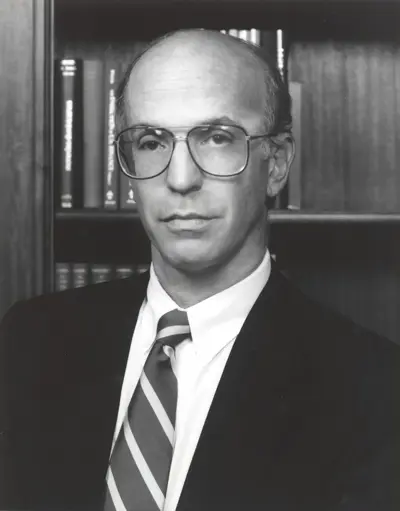
Alan Stuart Blinder is an American economist and the Gordon S. Rentschler Memorial Professor of Economics and Public Affairs at Princeton University who served as the Vice Chairman of the Board of Governors of the Federal Reserve System under President Bill Clinton.
