Charles Maurice de Talleyrand Quotes
Without any payment? Your Majesty, that would cost too much.
Prince de Benévant. The king, notoriously tight with money, had come up with the idea of not paying any of the French Deputies, and minsters of state. The honor of being appointed and serving would be sufficient. The Prime Minister persuaded the king that the cost would be too high. Where government officials are ill paid, they tend to use their power corruptly to extract money from the public or those they are supposed to regulate. This is a major problem in underdeveloped countries and even in some local and state governments here in America.
Charles Maurice de Talleyrand-Perigord, 1754–1838French Prime Minister, Response to King Louis XVIII, 1815
Sourced by: Eigen's Political and Historical Quotations


Bates was a successful private attorney who was very frugal with his money and was a potential Republican Presidential nominee. He realized that if he were in high office, he would be expected to entertain and maintain a lifestyle that would cost more than he would earn. Public expectations pressured politicians to spend beyond their means. Lincoln, who was the nominee, was at that point in his life quite well off as a result of his successful law practice, and while he did not succumb to the tendency to overspend that Bates herein describes, Mary Todd Lincoln, his wife, did and ran up many debts.

Describing the right under the Constitution for the deposed military dictator, Augusto Pinochet, as a former head of state to become a Lifetime Senator:

Explaining why he was resigning from government service:


Note that early constitutional experts assumed that one of the President’s roles was to be non partisan and control partisanship. Note the phrase ‘prevent the artifices of party’. The early founders were very wary of political parties of ‘factions’ as Madison called them. However, most were extremely partisan although in the Presidency partisanship was toned down by George Washington but after him, partisan ship became the norm.


This extreme position illustrates how a politician, trying to defend a particular position can get carried away and lose rational sense of balance. The air we breath is free and quite valuable—essential really. The exercise of most of our political rights is without charge. Legitimate religions do not require payment.


5th Earl of Rosebery

In the letter, he was refusing a donation of five hundred guineas for his efforts in Parliament on behalf of the persecuted Roman Catholics of Ireland. See related quotes.


become a member of the cabinet

He had been George W. Bush's Defense Secretary, and had just agreed to serve President Barack Obama i the same role.


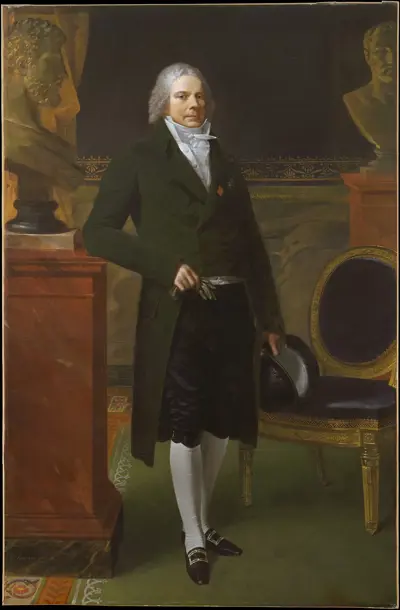
Charles-Maurice de Talleyrand-Périgord, 1st Prince of Benevento, then Prince of Talleyrand, was a French clergyman and leading diplomat. After studying theology, he became Agent-General of the Clergy in 1780. Just before the French Revolution, he became Bishop of Autun. He worked at the highest levels of successive French governments, most commonly as foreign minister or in some other diplomatic capacity. His career spanned the regimes of Louis XVI, the years of the French Revolution, Napoleon, Louis XVIII, and Louis-Philippe. Those Talleyrand served often distrusted him but, like Napoleon, found him extremely useful. The name "Talleyrand" has become a byword for crafty, cynical diplomacy.
