Voltaire Quotes
A minister of state is excusable for the harm he does when the helm of government has forced his hand in a storm; but in the calm he is guilty of all the good he does not do.
Voltaire, 1694-1778, [Francois-Marie Arouet], French Historian & Dramatist Letter to Charles-Augustin Ferriol, comte d'Argental, August 28, 1760
Sourced by: Eigen's Political and Historical Quotations


This Nixon technique of politicians and major American leaders blaming all the other leaders for a national crisis was used by both political parties during the aftermath of the Great Recession and economic meltdown of 2008.


At the time Harrison, one of the signers of the Declaration of Independence, was a Colonel serving under Washington. The war had been somewhat successful but the country was very weak and in great danger, and Washington and many others thought that Congress needed a better quality of leadership. Harrison’s son and great grandson would both become Presidents of the United States.


This was an amazing statement for an all powerful Roman Emperor. Few national leaders—even in democracies would go this far. In early America, some Presidents had this attitude and saw themselves as servants of the Congress to a great extent. Over time, the power of the Congress diminshed and that of the Presidency grew, and no modern president considered himself the servant of the Congress.


Once he assumed the Presidency however, he flip flopped on this issue and approved prosecution of the Drake case and other whitle blowers. At the beginning of his second term, Edward Snowden, tried to get his superiors to do something about the massive surveillance of the American Public that the intelligence agencies were carrying out in secret. When Snowden was ignored, he went public through two newspapers. Obama castigated him for revealing that the government officials had lied and were operating a secret spying and eavesdropping system monitoring virtually every American. The Obama Administration chased him around the world trying to get him extradited for criminal trial in the United States.


Talking to young elementary and junior high school students.


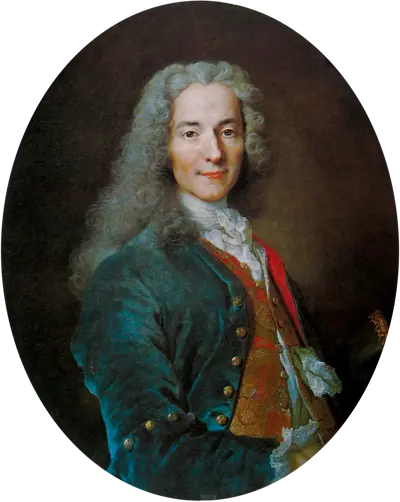
François-Marie Arouet, known by his nom de plume Voltaire (/vɒlˈtɛər, voʊl-/; also US: /vɔːl-/; French: [vɔltɛːʁ]), was a French Enlightenment writer, historian, and philosopher famous for his wit, his criticism of Christianity—especially the Roman Catholic Church—as well as his advocacy of freedom of speech, freedom of religion, and separation of church and state.
