Robert H. Jackson Quotes
With the law books filled with a great assortment of crimes, a prosecutor stands a fair chance of finding at least a technical violation of some act on the part of almost anyone. In such a case, it is not a question of discovering the commission of a crime and then looking for the man who has committed it, it is a question of picking the man and then searching the law books, or putting investigators to work, to pin some offense on him.
Jackson, Robert H. "The Federal Prosecutor." Journal of the American Judicature Society, vol. 24, no. 1, June 1940, p. 18.


The United States is almost unique among nations in their respect. While there are Federal law enforcement officers, the number is very small. For example, the entire Federal Bureau of Investigation complement of agents is outnumbered by one of the three shifts of the New York City Police Department. The vast majority of the police officers in America are not even at the State level; it is at the local level.
This statement was an extension of the famous quotation of Oliver Wendell Holmes Jr. {603715}.


This quotation is a great example of the difficulty of deciding some of the major Constitutional issues. Most reasonable people believe that Rehnquist certainly has a point. On the other hand, critics observe that this quotation essentially says that it is OK to convict an innocent person if it cost too much or be too much trouble to do so. Reasonable people would also agree that this objection has much merit also. So the judicial system is stuck with deciding when the cost or trouble is too much. There will never, can never, be a clear cut answer.

He was one of the few “national security hawks” who was willing to place this issue in the public table. In the 21st Century, there were some Muslims living in Democratic countries who were or had just become radical Islamic extremist jihadist by religious belief and philosophy. Some would preach or advocate violence in terrorism against Democracy and the west. Many of these people with radical Islamic beliefs would give material aid and comfort to terrorists and some would themselves engage in terrorist activities themselves. When they did, it was too late to prevent tragedies. So there was this population of emotional and intellectual terrorists who could act on their beliefs at any moment. These are what Hayden referred to as the “not yet guilty”. Preventive detention could protect against serious terrorist attacks. But the legal system of virtually every democracy had no legal bases to incarcerate or move against anyone for his/her beliefs or speech. Criminal charges required action other than thoughts, beliefs or speech. But by waiting until there is terrorist action, the law enforcement authorities give up the ability to prevent the terrorist action. Some were advocating changes in this fundamental and traditional distinction of law enforcement.

Many like Black were concerned that prosecutors had the power to decide who would be charged, with what crimes, what penalties to ask for, and even able to start or end investigations of private citizens and politicians. By overcharging they are able, if they choose, to intimidate many people into pleading guilty, even for crimes that the never committed, in order to avoid taking a chance and possible have a very long jail sentence. Thus they were the most powerful people in the legal system, and had more power and less accountability, checks and balances of any public figures except perhaps for Federal Judges.


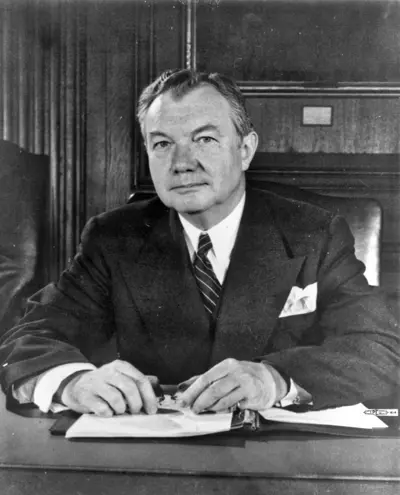
Robert Houghwout Jackson was an American attorney and judge who served as an Associate Justice of the United States Supreme Court. He had previously served as United States Solicitor General and United States Attorney General, and is the only person to have held all three of those offices. Jackson was also notable for his work as Chief United States Prosecutor at the Nuremberg trials of Nazi war criminals following World War II.
