John Marshall Harlan Quotes
The States have always borne primary responsibility for operating the machinery of criminal justice within their borders, and adapting it to their peculiar circumstances.
The United States is almost unique among nations in their respect. While there are Federal law enforcement officers, the number is very small. For example, the entire Federal Bureau of Investigation complement of agents is outnumbered by one of the three shifts of the New York City Police Department. The vast majority of the police officers in America are not even at the State level; it is at the local level.
John Marshall Harlan, 1833-1911, U. S. Supreme Court Justice, 391 U.S. at 172
Sourced by: Eigen's Political and Historical Quotations

In addition, most state and local corrupt officials are detected, and prosecuted by Federal law enforcement officials as local and sometimes state corruption involves the local and state law enforcement officials as well as others so local authorities often turn a blind eye towards corruption.


Martin and other anti-Federalists argued against ratifying the new Constitution as they thought that it was inimical to the state’s interest. The notion of Federalism as a danger to states is clearly stated in this quotation for the debate on Constitutional ratification. Fundamentally, are Senators representatives of their states or of the Federal Government. If the former, who can the senators be recalled or impeached by the states to who the presumably owe their loyalty? This issue, like so many others, was compromised. The States would control the selection and method of selection of the Senators but could not recall or impeach. Looking back, we see this as logically inconsistent. However, looking at it as a political compromise between two legitimate points of view, it seems quite reasonable. Early America was a combination of idealism and pragmatism which has carried throughout American history.


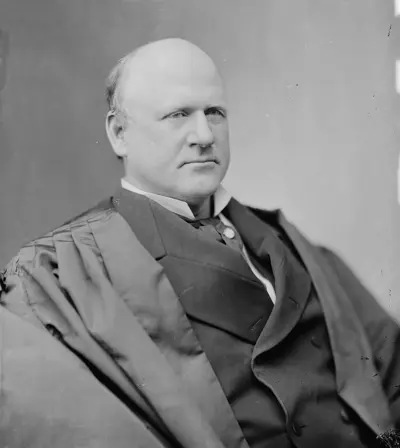
John Marshall Harlan was an American lawyer and politician who served as an associate justice on the U.S. Supreme Court. He is often called "The Great Dissenter" due to his many dissents in cases that restricted civil liberties, including the Civil Rights Cases and Plessy v. Ferguson. Many of Harlan's views expressed in his notable dissents would become the official view of the Supreme Court starting from the 1950s Warren Court and onward. His grandson John Marshall Harlan II was also a Supreme Court justice.
