John C. Calhoun Quotes
With such irresistible evidence before us of the great and rapid progress of abolitionism without the slightest indication of abatement, he is blind who does not see, if the state of things which has caused it should be permitted to continue, that it will speedily be too late, if not to save ourselves, to save the Union.
Calhoun, John C. "Speech on the Slavery Question." The Works of John C. Calhoun, edited by Richard K. Crallé, vol. 4, D. Appleton and Company, 1854, p. 544.


The Baptist Churches of America were split asunder by the slavery issue. Wayland, who represented both the Northern abolitionist-leaning Baptist Churches and the Southern pro slavery churches, tried to forge a middle ground whereby slavery would end by the moral enlightenment of man and his love for fellow man as opposed to by legislation or economic pressure. He successfully predicted the outcome of the conflict except for one error he made. The conflict DID end slavery. The Baptist Church finally split into southern and northern wings in 1845. To this day, the Southern Church is extremely conservative, and fundamentalist; the Northern, very liberal and modern.


The first anti-slavery newspaper published in the United States & the first journal in America to advocate immediate, unconditional emancipation

In this quotation Lincoln got out of the rhetorical trap that Douglas had set for him by disclosing his personal preferences as opposed to the positions that Douglas had accused him of being pledged to. See {615827}.


The cause of the Civil War was slavery. When the Souh fired on the nation’s army and governmental personal, the secession became treason. So Slavery was the cause of the treason. Douglass argued that if we eliminate slavery, we eliminate the cause of the Treason.

This was her last public speech.

This was not an original notion with Abraham Lincoln. Seward and most of the “Radical Republicans” believed that the slavery issue had to be resolved and attempts to compromise were futile.


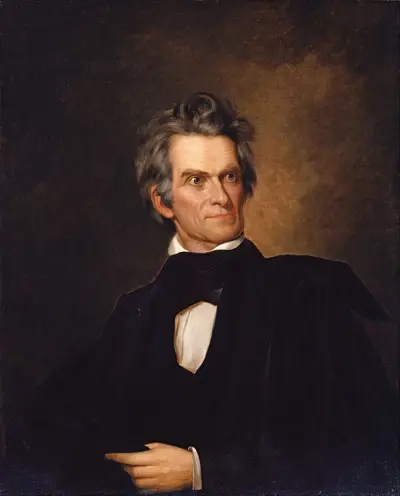
John Caldwell Calhoun was an American politician and political theorist from South Carolina who held many important positions including being the seventh vice president of the United States from 1825 to 1832, while adamantly defending slavery and protecting the interests of the white South when its residents were outnumbered by Northerners. He began his political career as a nationalist, modernizer, and proponent of a strong national government and protective tariffs. In the late 1820s, his views changed radically, and he became a leading proponent of states' rights, limited government, nullification, and opposition to high tariffs. He saw Northern acceptance of those policies as a condition of the South remaining in the Union. His beliefs and warnings heavily influenced the South's secession from the Union in 1860–1861.
