Mark Twain Quotes
Why waste your money looking up your family tree? Just go into politics and your opponent will do it for you.


His older brother was running for Consul—the highest elected office of the Roman Empire. The Handbook, was his advice to his brother as to how to conduct his campaign.


In 1934 writer Upton Sinclair won the California Democratic gubernatorial nomination. The Republicans spent three times the funds that they had committed against Roosevelt in the 1932 presidential election to defeat Sinclair. In particular, they used the first "media consultants" in American political campaigns to comb through all of Sinclair's novels finding dialogue of the villains which were then ascribed to Sinclair in a series of cartoons distributed throughout the state:


The Congress was debating President Johnson’s Voting Rights Bill. Southern Democrats and Conservative Republicans were opposed to legislation that would prevent states from discriminating against Black and other minority voters. Johnson needed the support of minority leader Dirksen and the moderate Republicans. Dirksen was at the White House discussing the strategy for the passage of the bill. This quotation illustrates the “partisanship of the day” where opponents were quite friendly even when they were “denouncing” each other, The venom and personal disrespect and hatred of the beginning of the 21st century was absent in the 1960s even though the most radical and controversial legislation was being debated. The Civil Rights Act, the Voting Rights Act, Non Discrimination in Housing and Medicare were all passed that year with filibusters and cloture votes. Yet there was always comity.

At the time political parties and some candidates had their own newspapers and attacked their opponents through those rather than directly themselves which would have been seen as gross and undignified, Slander and attacks have been a part of American politics since its inception. The degree and extent reached its pinnacle in the early 21st century.

_0_PostageStamp_47x47.jpg "Chairman of the Joint Chiefs of Staff Navy Adm. Mike Mullen gives an interview to John Dickerson during the CBS news program Face the Nation in Washington, D.C., July 5, 2009. During the interview, Mullen discussed the wars in Iraq and Afghanistan, North Korea's recent missile tests and his recent visit to Russia. (DoD photo by Mass Communication Specialist 1st Class Chad J. McNeeley, U.S. Navy/Released)")


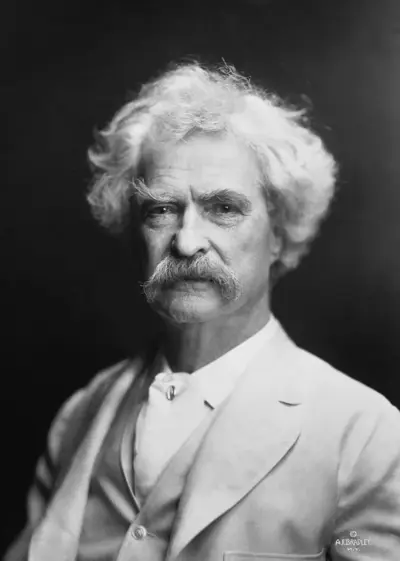
Samuel Langhorne Clemens, known by his pen name Mark Twain, was an American writer, humorist, entrepreneur, publisher, and lecturer. He was lauded as the "greatest humorist the United States has produced," and William Faulkner called him "the father of American literature". His novels include The Adventures of Tom Sawyer (1876) and its sequel, the Adventures of Huckleberry Finn (1884), the latter often called "The Great American Novel".
