Winston Churchill Quotes
Why hasn’t Gandhi died yet?
Churchill, unlike some British politicians, was not a big fan of Gandhi.
Winston Churchill, 1874-1965, British Prime Minister (Conservative), Handwritten response to note telling him that India was in the midst of a famine with almost a million people dying
Sourced by: Eigen's Political and Historical Quotations


1st Earl of Beaconsfield


The Partition was accompanied by over 2 million murdered Indians as India was divided into a smaller India with almost all the Hindus and Sikhs and a slight majority of the Muslims and Pakistan with all Muslims who made that choice. Pakistan has been trying to de stabilize the area ever since to gain control of more land and became a theocracy and military dictatorship—sometimes de facto and sometimes de juro.
Although he was the first Western philosopher to emerge from the dark ages, he was one of the great advocates for freedom of speech and freedom of thought. He not only was publicly critical of many authority figures of the day, but he refused Pope Nicholas I’s orders to submit his work to Church censorship. He was supported by King Charles nonetheless, but various church councils condemned many of his writings. Ironically, one of his works that caused so much criticism was a defense of one of the views of Hincmar, the cleric who he attacked in the quotation. The radical notion was that the destiny of an individual is not totally dependent upon God, but that man has been given free will and that has some part in determining salvation.


Samuel Langhorne Clemens, 1835-1910

This is one of the great political putdowns in history. He in effect called Dundas a liar without ever being overt or nasty.


That is exactly what happened. However it would not happen until after the Second World War.


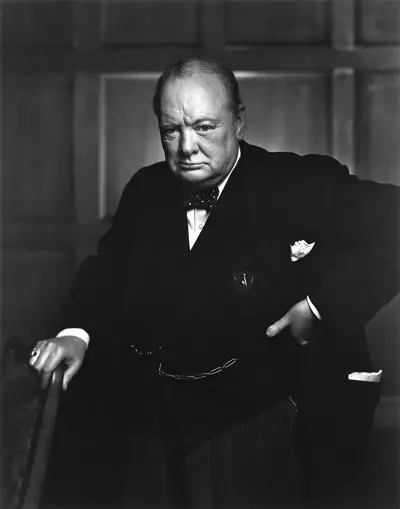
Sir Winston Leonard Spencer Churchill, KG, OM, CH, TD, DL, FRS, RA was the Prime Minister of the United Kingdom from 1940 to 1945, during the Second World War, and again from 1951 to 1955. Apart from two years between 1922 and 1924, Churchill was a Member of Parliament (MP) from 1900 to 1964 and represented a total of five constituencies. Ideologically an economic liberal and imperialist, he was for most of his career a member of the Conservative Party, as leader from 1940 to 1955. He was a member of the Liberal Party from 1904 to 1924. Churchill was also well known for his military career and as a historian, painter and writer, and among his many awards was the Nobel Prize in Literature.
