Hector Hugh Munro Quotes
… one of those people who would be enormously improved by death.
Hector Hugh Munro, 1870-1916, [Saki], English Author, The Feast of Nemesis
Sourced by: Eigen's Political and Historical Quotations


The nation was engaged in a great debate over the ratification of The Constitution that had been drafted the previous year. Virginia was one of the 4 major states. Madison and Jefferson were leaders of the pro-ratification forces in Virginia. However the leader of the anti ratification forces was Patrick Henry and he seemed to be winning. Jefferson was writing about further refinement of their efforts. His statement in this letter was in jest, but there was a little bit of wishful thinking.


The 113th Congress was the worst Congress in history in terms of hyperpartisanship, lack of comity, and ability to pass legislation. They passed less than 100 bills whereas a normal modern Congress passes 7 or 8 times that number. No Congress in history could only agree on less than 100 bills. The polls had Congressional approval down to single digits.


They never met. Harrison lost to Barkley by a single vote. Harrison’s fellow Senator from Mississippi was Theodore Bilbo, 1877-1947, a notorious racist and demagogue and Harrison would have nothing to do with Bilbo. However, in 1937 Harrison was a candidate for the Senate Majority Leader and appeared tied with Alben Barkley. Bilbo sent word to Harrison that if he would meet with him, Bilbo would vote for Harrison.

His daughter had just succumbed to the disease.

Churchill, unlike some British politicians, was not a big fan of Gandhi.

Expressing his feeling regarding President Grover Cleveland who failed to deal with serious economic problems:


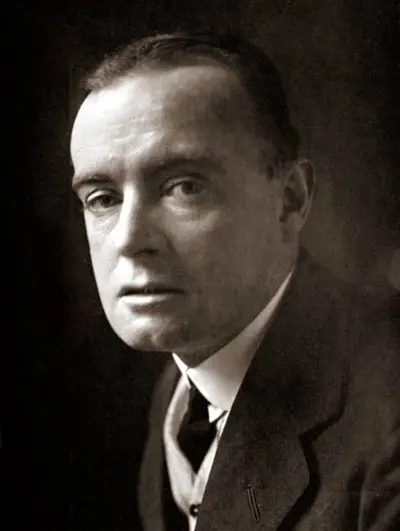
Hector Hugh Munro, better known by the pen name Saki and also frequently as H. H. Munro, was a British writer whose witty, mischievous and sometimes macabre stories satirize Edwardian society and culture. He is considered by English teachers and scholars as a master of the short story, and often compared to O. Henry and Dorothy Parker. Influenced by Oscar Wilde, Lewis Carroll and Rudyard Kipling, he himself influenced A. A. Milne, Noël Coward and P. G. Wodehouse.
