William Jennings Bryan Quotes
Why be shocked at the drowning of a few if there is no objection to starving a nation?
In 1915 England had a food blockade against Germany. Germany had begun U-boat attacks on British flag civilian liners:
William Jennings Bryan, 1860-1925, U. S. Secretary of State, U. S. Congressman (Democrat, NB), 3 Time Unsuccessful Democratic Presidential Candidate, Question asked of President Woodrow Wilson, 1915
Sourced by: Eigen's Political and Historical Quotations


The mal-distribution of resource problem is common in most societies.


He did previous research on the operators and their most visible factors of great wealth.

England had a high protective tariff called the "Corn Laws" which artificially maintained a high price of grain. Cobden had made a condolence call to a wealthy friend whose wife had just died. In a dramatic call to public service:. The friend joined Cobden and their team traveled throughout England arguing their case. As a result of their efforts the Corn Laws were repealed saving tens of thousands of lives and the friend became one of England's most illustrious politicians.


During the Irish potato famine, other crops continued to be exported from Ireland. Some argued that without the exports the Irish economy would totally collapse exacerbating the pain to Ireland, but many others disagreed and argued that all available food should be used for the people of the country. For his seditious activities he was sentenced to penal servitude for life. He escaped and came to America where he entered politics
For his seditious activities he was sentenced to penal servitude for life. He escaped and came to America where he entered politics

Supporting foreign aid in the form of food relief:


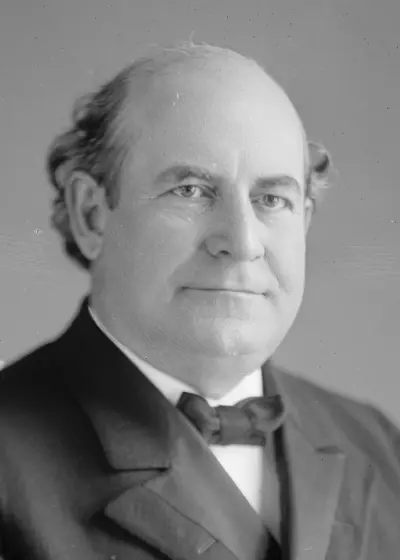
William Jennings Bryan was an American orator and politician from Illinois and Nebraska. Beginning in 1896, he emerged as a dominant force in the Democratic Party, running three times as the party's nominee for President of the United States in the 1896, 1900, and 1908 elections. He also served in the United States House of Representatives and as the United States Secretary of State under Woodrow Wilson. Because of his faith in the wisdom of the common people, he was often called "The Great Commoner".
