Thomas Francis Meagher Quotes
England seizes our food whilst death seizes on our people.
During the Irish potato famine, other crops continued to be exported from Ireland. Some argued that without the exports the Irish economy would totally collapse exacerbating the pain to Ireland, but many others disagreed and argued that all available food should be used for the people of the country. For his seditious activities he was sentenced to penal servitude for life. He escaped and came to America where he entered politics
Thomas Francis Meagher, 1823-1867, Irish Founder of the Irish News and Co-Founder of the Irish Confederation, Irish Revolutionist, Organizer and General of the New York Irish Brigade of the American Civil War Union Army, Secretary of Montana, Appointed Governor of Montana but drowned before taking office, Speech, Repeal Association, Dublin, 1847
Sourced by: Eigen's Political and Historical Quotations

Reflection on the Irish Potato Famine of 1845-1850

Even a cursory reading of the Koran and early Muslim history would show that there were vast inequalities in the economic order long before the ‘imperialists’ were involved in the Middle East. Throughout the Islamic world there has always been the oppressors and the oppressed and inequality has usually been much worse than in the ‘imperialist’ countries.


England had a high protective tariff called the "Corn Laws" which artificially maintained a high price of grain. Cobden had made a condolence call to a wealthy friend whose wife had just died. In a dramatic call to public service:. The friend joined Cobden and their team traveled throughout England arguing their case. As a result of their efforts the Corn Laws were repealed saving tens of thousands of lives and the friend became one of England's most illustrious politicians.


For his seditious activities he was sentenced to penal servitude for life. He escaped and came to America where he entered politics

Executed by the English for his part in the Easter Uprising.


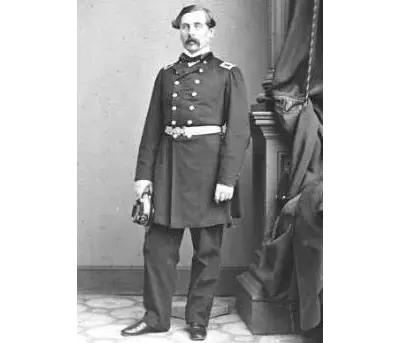
Thomas Francis Meagher was an Irish nationalist and leader of the Young Irelanders in the Rebellion of 1848. After being convicted of sedition, he was first sentenced to death, but received transportation for life to Van Diemen's Land (now Tasmania) in Australia.
