Richard Cobden Quotes
There are thousands of houses in England at this moment where wives, mothers and children are dying of hunger. When the first paroxysm of your grief is past ... come with me, and we will never rest until the Corn Law is repealed.
England had a high protective tariff called the "Corn Laws" which artificially maintained a high price of grain. Cobden had made a condolence call to a wealthy friend whose wife had just died. In a dramatic call to public service:. The friend joined Cobden and their team traveled throughout England arguing their case. As a result of their efforts the Corn Laws were repealed saving tens of thousands of lives and the friend became one of England's most illustrious politicians.
Richard Cobden, 1804-1865, British Member of Parliament, Co-founder, Anti-Corn League, Remark to John Bright, 1841
Sourced by: Eigen's Political and Historical Quotations

During the Irish potato famine, other crops continued to be exported from Ireland. Some argued that without the exports the Irish economy would totally collapse exacerbating the pain to Ireland, but many others disagreed and argued that all available food should be used for the people of the country. For his seditious activities he was sentenced to penal servitude for life. He escaped and came to America where he entered politics

So often diplomatic negotations are ongoing about “solutions” to world problems while people in crisis do not get any immediate help which is needed.

“Sir Robert” was Prime Minister Robert Peel. See {630737}.


Britain, in order to protect the landed gentry and aristocracy who made their money via agriculture, long had the Corn Laws (Corn was the term for wheat.) which was a protectionist system making it virtually to import food grains, rice or potatoes into Britain. However, with the growth of the population and a protected agricultural industry that had no drive to be more productive there was not quite enough food in the kingdom. When there was a potato blight in Ireland, the situation reached critical proportions. Victoria was not generally in favor of protectionism, and given the shortage and high cost of food then, she wanted to allow food imports. Robert Peel presided over a government where the protectionists who represented the large landowners had a very strong block. Pushing for an end to the Corn Laws could have caused the government to collapse. Peel himself did not think the Corn Laws were good policy and created a hardship for most people especially the poor. But he was the leader of his party and the party was split on the Corn Law issue. Victoria, in this private letter, tells him to do what he things is right and not what is politically expedient. Peel tried but at this time could not get a majority to repeal the Corn Laws, and the Irish Potato Famine killed millions. See {630738} . Peel however stuck with the Queen’s and his perception of what was right. The following year he proposed the Importation Act 1846 which repealed the Corn Laws. Many of his own party would not support it, but this time, he went to the two opposition parties and created a slim majority which passed the bill much to the approval of the Queen.


The president was right. There is enough food to go around. The problem however is logistical, economic, and political. Some countries use food as a weapon to keep their own people under control. The major problem is the distribution of the food. It has to be transported from where it is gown to where it should be consumed. Much food in the third world rots because the transportation system cannot move the food efficiently enough. Even when food is donated to nations, the free or cheap food undercuts the local farmers who go out of business and there is even less food the following year.


Reflection on the Irish Potato Famine of 1845-1850


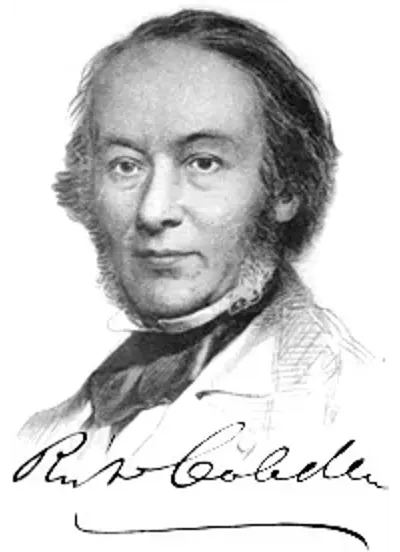
Richard Cobden was an English manufacturer, Radical and Liberal MP, associated with two major free trade campaigns, the Anti-Corn Law League and the Cobden–Chevalier Treaty.
