Ruhollah Khomeini Quotes
The imperialists have also imposed on us an unjust economic order, and thereby divided our people into two groups: oppressors and oppressed. Hundreds of millions of Muslims are hungry and deprived of all form of health care and education.
Even a cursory reading of the Koran and early Muslim history would show that there were vast inequalities in the economic order long before the ‘imperialists’ were involved in the Middle East. Throughout the Islamic world there has always been the oppressors and the oppressed and inequality has usually been much worse than in the ‘imperialist’ countries.
Ruhollah Khomeini, 1900-1989, Iranian High Cleric (Ayatollah) & Revolutionary Leader, Islam and Revolution
Sourced by: Eigen's Political and Historical Quotations


During the Irish potato famine, other crops continued to be exported from Ireland. Some argued that without the exports the Irish economy would totally collapse exacerbating the pain to Ireland, but many others disagreed and argued that all available food should be used for the people of the country. For his seditious activities he was sentenced to penal servitude for life. He escaped and came to America where he entered politics


AI Explanation: This is a famous philosophical observation attributed to the early Christian author Lactantius. It suggests that true poverty isn't about a lack of material wealth, but rather being denied fairness, equality, or your rightful claims.


Ingersoll was considered to be the greatest orator and political thinker of his day, but his overt atheistic views curtailed his elected political career.

The nobles of the city were in rebellion and fought the English Prince of Wales. When the city was taken, the poor people as well as the nobles were executed for their part in the “rebellion.” However, the poor had no say in the matter, and it was not they who ordered the city gates shut and decided to undergo a siege, which in this case was not successful. Limoges was a heavily walled city, well provisioned for a siege, but the English had miners who undermined part of the city walls and crashed them into the moat and allowed the English to walk in easily.


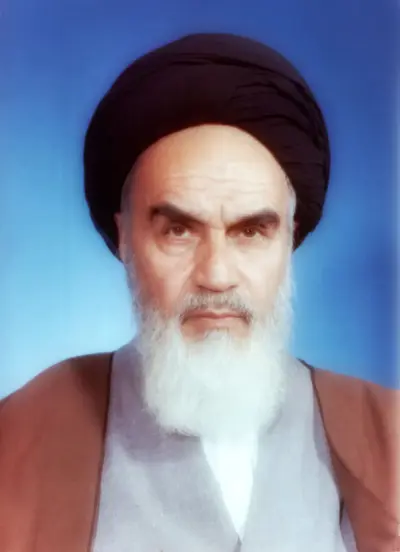
Sayyid Ruhollah Musavi Khomeini, also known in the Western world as Ayatollah Khomeini, was an Iranian political and religious leader. He was the founder of the Islamic Republic of Iran and the leader of the 1979 Iranian Revolution, which saw the overthrow of the last Shah of Iran, Mohammad Reza Pahlavi, and the end of the 2,500-year-old Persian monarchy. Following the revolution, Khomeini became the country's Supreme Leader, a position created in the constitution of the Islamic Republic as the highest-ranking political and religious authority of the nation, which he held until his death. Most of his reign was taken up by the Iran–Iraq War of 1980–1988. He was succeeded by Ali Khamenei on 4 June 1989.
