Monte Melkonian Quotes
While many of us feel a strong emotional attachment to our homeland, we should not allow emotions to deter us from speaking of things the way they really are. It should be remembered that this very surrender to emotion has led to insane and counterproductive atrocities on the scale of the Ankara and Istanbul suicide assaults, as well as the Orly bombing and the Lisbon disaster. By surrendering to emotions we enable the A.R.F. and slogans like "Hagop Hagopian" to lead thousands of well-intentioned patriots down a path which does not lead to Armenia, and to sacrifice the lives of young fighters in campaigns which directly contradict the interests of the Armenian people. If we are to achieve even the minimum requirements for Armenian national self-determination, we must approach problems in a serious and sober manner.
Monte Melkonian, 1957–1993 Armenian Patriot & Nationalist, The Right to Struggle
Sourced by: Eigen's Political and Historical Quotations


Annan had asked UN nations to contribute troops but few would.


He was ironically observing that most animals and primitive humans, there is fighting among the species but rarely do the fight to the death. One usually gives up, and the other will let him retire from the fight. The fighter who is getting the worst of it, will retire from the battle. However, “civilized” humans will fight for principles and ideas often to the death. “Civilized humans” also think ahead and will strive to exterminate an enemy and kill even after surrender or submission.

This turns out to be very much a cultural phenomenon. Amongst educated Englishmen and many scientists and philosophers from America and other cultures but in some cultures opinions stated without passion are often not believed�this is particularly true in the Middle East but exists in many subcultures of America. In science, and the logical philosophy that Russell was so expert in, either you could prove something or you could not. If you could, the passion was unnecessary. If you could not, it was irrelevant. However, in most political issues, except those based on science, most assertions are not provable and although there may be some evidence for a view, it is not determinative. So volume. Bombast, and passion tries to persuade where logic cannot. Russell and many scientists and Philosophers distrust these statements, but the politician must deal with most of them, as public policy must be made whether the issue is scientifically demonstrable or not. Life and society must go on. However, when scientists testify before Congressional committees or in other political arenas, their lack of passion is taken by many as a lack of conviction or a lack of surety, while if they did speak with great passion, they would break the norms of the scientific community in which they work, for it is regarded as unethical to persuade people with anything but the evidence and logic.

We know now that a number of animals other than humans both reason AND have feeings. Octopus, elephant, crows are just 3 species other than the monkeys and apes. In 1913, this was not realized.


Trumbo was morally opposed to war. He also refused to name Hollywood communists to Congressional Committees during the Red Scare. He was then blacklisted from his occupation, screen writing.

In politics, especially democratic politics, a minority that is passionate and committed can have more of an effect on the political outcome than a larger group—even a majority—that is not committed and passionate about their issue.

The politicians, theologians, and common people of the day believed that if a comet were sighted, death of important people (magnates) or war was sure to follow. With all the deaths and wars, they tended to follow any event, but Albertus Magnus was one of the few men who dared to challenge the conventional wisdom of the Church, the philosophers, and the politicians of the day. He was one of the theologians of history who were also good scientists and this quotations illustrates that not all clerics and theologians of the era were of a like mind despite the authoritarianism of the church.


He had been mortally wounded in battle and asked the Duc de Bourbon to prop him up against a tree facing the enemy. Then enemy army was French also but abandoned the cause of the French King to fight with the more powerful Holy Roman Emperor, Charles V. He was only going to die, but the enemy would remain traitors for ever. This was typical of the code of the Knights of which he is sometimes referred to as the Last of the Knights.


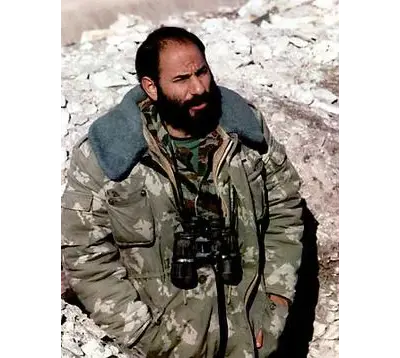
Monte Melkonian was an Armenian-American revolutionary, left-wing nationalist militant, and national hero. He was the leader of an offshoot of the Armenian Secret Army for the Liberation of Armenia (ASALA) in the 1980s and was a commander in the Armenian army in Nagorno-Karabakh fighting Azerbaijan during the First Nagorno-Karabakh War in the early 1990s. Melkonian left the United States and arrived in Iran in 1978 during the beginning of the 1979 Revolution, taking part in demonstrations against the Shah. Following the collapse of the Shah's monarchy, he traveled to Lebanon during the height of the civil war and served in an Armenian militia group in the Beirut suburb of Bourj Hammoud. In ASALA, he took part in the assassinations of several Turkish diplomats in Europe during the early to mid-1980s. He planned the 1981 Turkish consulate attack in Paris. He was later arrested and sent to prison in France. In 1989, he was released and in the following year, acquired a visa to travel to Armenia.
