Elliott Abrams Quotes
While foreign competitors, French or Japanese or German, merrily bid for contracts abroad, American companies find themselves tangled in a web of legislation designed to express disapproval, block trade in certain commodities, or perhaps deny resources to disfavored or hostile regimes.
Abrams, Elliott. Pressure Points, Council on Foreign Relations, www.cfr.org/blog/pressure-points.


Referring to NAFTA, CAFTA and other international trade agreements


Referring to NAFTA and free trade with Mexico:


At the time, Republicans were the protectionists and Democrats were free traders—the reverse of the party roles at the end of the 20th century and the beginning of the 21st.


In England at the time, the liberals were for free trade and the conservatives against. In both England and America both liberals and conservatives have flip flopped their roles in foreign trade several times. Free trade is a two edged sword; it aids domestic growth, employment and prosperity in some cases and hurts them on others. And there are always winners and losers for each example of free trade within any country. The result is no long term commitment and much flip flopping.

In this case the tariffs were imposed not to protect national industries but to simply raise revenue. In the early years of the United States, almost all of the Federal Revenue was raised this way.


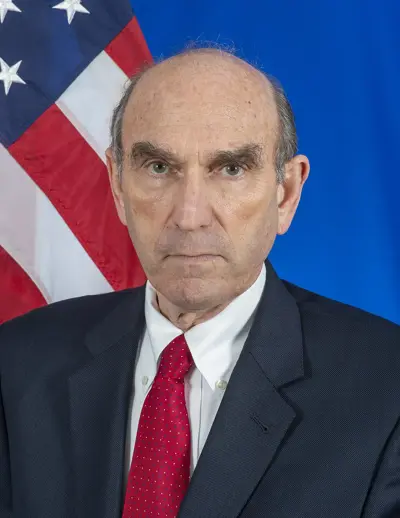
Elliott Abrams is an American politician and lawyer, who has served in foreign policy positions for Presidents Ronald Reagan, George W. Bush, and Donald Trump. Abrams is considered to be a neoconservative. He is currently a senior fellow for Middle Eastern studies at the Council on Foreign Relations. On January 25, 2019, he was appointed as Special Representative for Venezuela. On September 1, 2020, he was further appointed to concurrently serve as the U.S. Special Representative for Iran.
