Edmund Burke Quotes
Where there is a vast multitude of slaves as in Virginia, those who are free, are by far the most proud and jealous of their freedom
Edmund Burke, 1729-1797, Irish Orator & Member of the British Parliament, Quoted in John Chester Miller, The Wolf by the Ears, 1977
Sourced by: Eigen's Political and Historical Quotations


This law required the treatment of Blacks as whites were then treated with respect to indentured servitude—a limit of 10 years after which the person would be free. However, this law was poorly enforced. The “General Court” was the name for the legislature of the Rhode Island colony.

In the first part of the 18th Century, one county in Virginia became a magnet for runaway indentured servants, The more runaways settled there the more empathetic and hospitable they were to new runaway servants. The culture at the time had identified knowing your place in society and accepting it. So a runaway indentured servant had renounced their oath and contrast to serve their masters, and hence were not Christians. These renegades were armed and there was not enough political will or support for forcing the County to comply with the laws and mores of the time.
In early New England the General Court served as both a legislature and a judiciary before separation of powers was introduced. 5 years later the Court banned importing African slaves at all. While slavery was not common in Rhode Island, the laws was not seriously enforced on those who would defy them. It does represent a public anti-slavery sentiment that existed in Early America. It would take 200 years for Rhode Island to finally eliminate all forms of slavery.

The Federal Fugitive Slave Act required all in free states to assist owners of escaped slaves to return them to their owners. In 1854 a Missouri slave owner tracked his escaped slave to Wisconsin and the Federal officials incarcerated the slave pending his return. A Wisconsin mob broke the slave out of jail and helped him escape to Canada. Booth was convicted under the Fugitive Slave Act for aiding the escape. Booth’s conviction was overturned by Wisconsin Supreme Court Judge Smith whose opinion overturned the Fugitive Slave Act on the grounds that it had usurped state’s rights. The Supreme Court overturned Smith’s ruling, but Booth was pardoned. See {587928}, {587927} & {587928}. State’s rights is a concept that we generally identify with Southern slave holding states to maintain slavery, but in this case, Wisconsin used the concept to fight slavery.


She was referring to the political leaders of the South who were patriots and slave owners.

The slaves to which he is referring were the serfs of Slovakia who for hundreds of years had literally been the property of the Hungarian nobility. The problem however has been observed about any long-term slavery.


The essential conundrum for the Southerners of the Early United States was their independence as individual states vis a vis the trust and dependence that would be required if they gave up much of their traditional authority to manage their own affairs. However, if they chose to maintain States’ rights and other States did as well, they not only lose the security and unity of a nation, but the other states were more economically powerful, better educated, with stronger infrastructures as well. The changing world politics, industrialization, and technology was making it more and more difficult for a Southern State to have it both ways. They could have a loose affiliation of states, maintain their own autonomy but would be saddled with war debt and a slave-dependent economy that was itself deteriorating. Or they would be in a strong union where they were the weaker economic and political forces and might be politically and culturally dominated by states like Pennsylvania, New York and Massachusetts which would force major social and economic reforms upon the South. The knot to which Lee referred was the mythical one so complex that non could untie it, but it could instantly be cut with a sword. Lee argued that the Southern states would have to accept the dominance of the other states (which was like political slavery) or just cut the knot and not ratify the Constitution. More negotiating and trying to untie the knot would be useless.


He is often referred to as “of Lahore.” He was a much better theologian than a historian. His credit of Islam with the principles that would end slavery, ignored the fact that just as American founding fathers espoused equality and freedom yet some owned slaves, likewise Mohammed, the founder of Islam, was a slaveholder. Historically, long after most of the world had abolished slavery, it still existed in the Islamic nations. They were forced out of the African slave trade by the European powers in the 19th century. But slavery was legal in Saudi Arabia as late as the 1960s. Slavery was still practiced in Sudan in 2005 with Muslims attacking Christians and Animists and taking them as slaves despite the official laws banning such practices. The government itself aided the slavers. Also, although Islam is credited with a major assault on slavery, it was not slavery per se that Muhammad banned. It was the slavery of another Muslim. Sharia and the Koran allows slavery so long as the slave is an unbeliever.
Even before we had a Constitution there was major opposition to slavery. The “price” of the American Union was the acceptance of the slavery of the South. But the hypocrisy of a country based on liberty to allow and enforce slavery was not lost on the founding fathers. Ironically the abolitionists among the founding fathers were certain that they could persuade the Southern slaveholders of the error of slavery in a few years and things would be set right in the land. Even George Washington {630626}, and Thomas Jefferson and some other slaveowners at the time wished to see its abolition. Slaveholding Southern Founding Fathers in general were so wary of the abolitionists that they achieved structural, disproportionate, power in the new Constitution to ward off the abolitionists attempts to reform slavery.

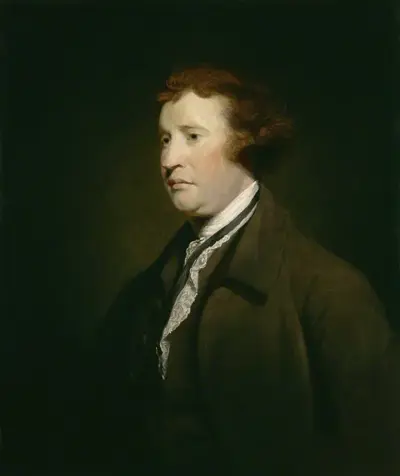
Edmund Burke was an Irish statesman, economist, and philosopher. Born in Dublin, Burke served as a member of parliament (MP) between 1766 and 1794 in the House of Commons of Great Britain with the Whig Party after moving to London in 1750.
