Muhammad Quotes
When you hear Allah's verses being rejected and mocked at by people, you must not sit with them till they start talking of other things.
This sura is used by moderate Muslims showing that The Prophet was somewhat tolerant of those who even mock the word of Allah. Nonetheless, most fundamentalist Muslims believe that anyone who mocks the word of Allah or His Prophet should be killed. Muhammad said not to sit with them—his modern followers too often call it heresy and want to kill them.
Muhammad, 571-632, Prophet and Founder of Islam, Koran 4:140
Sourced by: Eigen's Political and Historical Quotations

Al-Maarri’s quotations are not only meaningful in their own right, but they illustrate the openness and free thinking that was allowed in the early days of Islam before about 1100. If anyone wrote such things today in most Islamic countries he would at least be jailed if not executed for blasphemy. And if any Christian in Europe made the same statement, he would have been excommunicated at least if not tortured and murdered.

This is often referred to as the “prophetic mission.” This line appears on most Muslim coins and some monuments.

Whoever teaches differently from what I have taught, … condemns God and must remain a child of hell.
Humility and doubt were not characteristics of Martin Luther.


The Islamic Holy Book even recommends against friendships with Christians and Jews. See {584381}.

This quotation illustrates that a narrow orthodox view of Islam is not the only one in Arab nations. Khaled is not an obscure cleric, but a popular television personality. While his views are considered heresy by many orthodox Muslims, the narrow view is by no means universal. Orthodox Islamists believe that God has commanded that all mankind be Muslims and the ones who are not are either ignorant so need to be “educated”, or evil and therefore should be killed. However, Muhammad ordained that an exception should be made for “Children of the Book”—Jews and Christians who revere the Old Testament. This was at a time when Christians would not allow any other form of worship but Christianity. Christianity, Judaism and most other religions have become tolerant of other religions and allow open alternative worship. Islam which early on led the way to tolerance, has in many countries gone back to the intolerance that existed amongst many Christians at the time of Muhammad.

Many Arab orthodox Muslims would be terribly angry and insulted if Islam or key elements of it were insulted. To them this was obscene. Culturally, sarcastic comedic attacks and insults in general are not common in Arab culture. Making fun of Islam or the Prophet was unheard of. Under Sharia (Islamic Law) this is heresy and must be stopped, with the heretic put to death. In the early 21st century, the Internet and other modern communications exposed Muslims to the West in a level of detail that had been unknown before. Satirical TV shows like South Park and political and social cartooning in Western countries sometimes made fun of Islam and Muhammad, and militant Muslims would exploit these situations to produce huge protests including violent attacks on Westerners or interests of the countries where these “offences” took place. With little or no understanding of freedom of speech, many Arabs saw governments that would “allow” such satire as attacking and wanting to destroy Islam.


In an orthodox Muslim nation, freedom of religion as a right is impossible.
At the time Islam was quite conflicted about the role of innovation, science and reform. Innovators were to many theologians as dangerous to society as heretics and had to be refuted. Al-Ashari’s school of thought has prevailed in much of the Muslim world to this day.

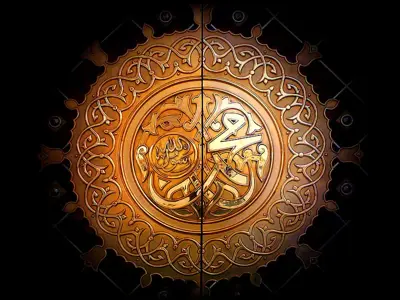
Muhammad was an Arab religious, social, and political leader and the founder of Islam. According to Islamic doctrine, he was a prophet, sent to preach and confirm the monotheistic teachings of Adam, Abraham, Moses, Jesus, and other prophets. He is believed to be the final prophet of God in all the main branches of Islam, though some modern denominations diverge from this belief. Muhammad united Arabia into a single Muslim polity, with the Quran as well as his teachings and practices forming the basis of Islamic religious belief.
