Ralph Bunche Quotes
When the curtain dropped on the [Marcus] Garvey theatricals, the black man of America was exactly where Garvey had found him, though a little bit sadder, perhaps a bit poorer—if not wiser.
Ralph Bunche, 1904-1971, U. N. Undersecretary General, Nobel Laureate in Peace, Quoted in Myrdal, An American Dilemma
Sourced by: Eigen's Political and Historical Quotations

Dr. Ambrose was the senior Black education official in the country. Note his title which was given to him by President Franklin Delano Roosevelt.


Ironically Fort-Whiteman was arrested in Moscow in one of Stalin’s massive purges and sent to a Soviet Gulag where he died of starvation. He was one of several Americans who were Stalinist victims. Ironically, he was right about Blacks and revolutionary change, but whereas he thought the “revolution” would be a socialist and communist one, the “Civil Rights Revolution” was a legal, cultural and intellectual one. However, statements like this were taken advantage of by white racists who saw in every attempt to right the wrong of racial discrimination, a communist revolution in the making.

In the early 20th century, Carver and Du Bois were the two most important Negro leaders in America. However, they disagreed over tactics. Carver tended to believe that if the Negro would be educated and trained for meaningful occupations, he would rise in the eyes of the whites and discrimination would diminish. Du Bois was more cynical as can be seen in this quotation as he looked back on history when he was 95 and close to death. He had the advantage at this time of seeing that Washington’s strategy had failed, but he opposed Washington on this from the beginning. Most whites preferred Washington’s view as whites were relived of immediate moral responsibility for racism and the burden was placed on Blacks to train, develop and display themselves as worthy. It was only when very large numbers of Blacks had done this and nothing much changed in terms of civil and economic rights, that it was clear that Washington’ view had been hopelessly naïve.


Thus testimony was an example of one of the reasons that Black Americans lobbied to end the use of the word, Negro, in official documents to describe them. “Negro” was a term used by whites to describe Blacks but rarely used by Blacks until Reconstruction. A century later, cultural and official language went back to the language that the slaves had used to describe each other and added “African American” as well.

At the time the Democratic Politicians of the South went to extremes from refusing to register Black voters to countenancing assault, torture and even murder of Blacks who organized voter registration. When the racists switched to the Republican party, is was Republican politicians who tried to make voter registration and voting more difficult for minorities, but the means and degree of these efforts were very mild compared to what is was when Rustin uttered this quotation.

Note that Nixon attributed Rogers views on Blacks to the fact that Roers was from New York City which Nixon viewed as a hotbed of liberals and minorities. This quotation was uncovered in 2010 when more of the Nixon White House tapes were released. Nixon tended to have the worst stereotyped view of all minority groups. The implication of the inbreeding is a high percentage of mental retardation. It was never been established that the Black slaves in America were inbred as they came from many different tribes and slave owners did not attempt to have slaves of a single or even two tribes. There was a great deal of diversity. If anything Southern Whites were in danger of inbreeding as it was the custom for many first cousins to marry. This was just another of Nixon’s hateful, racial remarks based on no foundation of fact.

In the middle of WWII where Black soldiers were fighting and dying on the war front. Some had an expectation that they would, when they returned, would have their civil rights and an end to discrimination. Southerners did nothing but perpetuate the racist customs and laws of the South and it was not until the 1963 Civil Rights Act that there was to be major change.

She was one of the first prominent white southerners to denounce racial segregation. Also, she supported Martin Luther King’s protest organization in Montgomery long before most other whites.


Connor turned out to have been of great assistance to the Civil Rights Movements. His red-neck, ignorant, virulent, irrational hatred and his position made him an iconic, living, hyperbole of the American Southern Racist.


He was one of the people who popularized the term “Black Power”

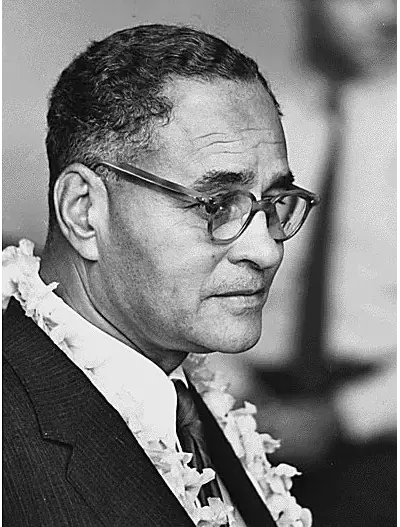
Ralph Johnson Bunche was an American political scientist, diplomat, and leading actor in the mid-20th Century decolonization process and US civil rights movement, who received the 1950 Nobel Peace Prize for his late 1940s mediation in Israel. In the List of black Nobel laureates he is the first African American and first person of African descent to be awarded a Nobel Prize. He was involved in the formation and administration of the United Nations and played a major role in both the decolonization process and numerous peacekeeping operations sponsored by the UN. In 1963, he was awarded the Presidential Medal of Freedom by President John F. Kennedy. At the UN, Bunche gained such fame that Ebony magazine proclaimed him perhaps the most influential African American of the first half of the 20th Century and "[f]or nearly a decade, he was the most celebrated African American of his time both [in the US] and abroad."
