Nur Muhammad Taraki Quotes
When our party took over political power, the exploiting classes and reactionary forces went into action. The only rusty and antiquated tool that they use against us is preaching in the name of faith and religion against the progressive movement of our homeland... They ought to be uprooted as a cancerous tumor is from the body of a patient in a surgical operation.
Nur Muhammad Taraki, ~1913–1979, President of the Communist Democratic Republic of Afghanistan, Speech, August 1, 1978
Sourced by: Eigen's Political and Historical Quotations


Joseph ben Matthias. The term was coined by Josephus to refer to the fundamentalist, orthodox Jewish view of a proper state, as opposed to a secular government. The Jewish fundamentalist dream of a theocracy came down through modern times. There were ultra-orthodox Jewish groups who opposed the creation of the State of Israel on the grounds that it is not a theocracy and there are some who still want to see Israel transformed. The term became generalized and is applied to any state where the religion is the state and religious leaders dominate and control the state. The ultra orthodox Muslims, as in Iran, are generally the only religious group who have created theocracies or semi-theocracies as Islamic states. See {638106} for the context in which the term was first used.


He was one of the early predictors of the fall of the Soviet Union. See {586209} for part of his reasoning.

The Muslim League was demanding that the Punjab become a part of Pakistan when independence was granted later. However, the Hindus, Sikhs, Buddhists, and Christians were all adamant that they would not live in a Muslim nation which would soon become a de facto theocracy if the British could not control them. The Punjab was divided between India and Pakistan, and hundreds of thousands died in Sikh-Muslim attacks and then Hindu-Muslim conflict in the Punjab.


In the last centuries, Egypt has been intellectually more advanced than the other Arab countries. It has a significant number of modernists who oppose religious influences on Government. During the Arab Spring when the old regime was ousted, the modernists had hopes that a modern democracy would be formed that was not controlled of even significantly influences by religious leaders and where women would have equal rights. However, the first election the Muslim Brotherhood, a religious party won, and then tried to institute Islamic law—Sharia. A coup ousted the Muslim Brotherhood, and then many dreamed again of a modern, non-sexist, secular democracy. Professor Ajami tried to give them a more realistic view.


This is only one of many anti-American and anti-Israeli and anti-Semitic passages in the text. It is typical of much of the Wahhabi literature which also supports jihad and violence. Much of the funding for the Wahabbi comes from the Saudi Arabian Government and members of the Saudi Royal Family. There is total censorship in Saudi Arabia and nothing gets preached or printed if the Saudi government wishes otherwise. However, most of the imams in Saudi Arabia are Wahhabi and are paid by the government. The Royal Family’s only fear of losing power is if the Islamic clerics claim that the government is not supportive of Islam. They spend much money to buy their lack of opposition to the monarchy. The government position however is contrary to these hate-filled textbooks.

Saloth Sar Pol Pot. His view was that any small merchant or tradesman running a business was a capitalist, and all educated were enemies of the people. He moved entire populations out of the cities into the countryside where they would live as peasants or be murdered as about 20% of the entire population as. Therefore, in his warped view, the capitalists could no longer “control” Cambodia.


This is one of the more passionate and colorful descriptions of Conservatives in the political literature. The conservative party were called Orangists as they were supporters of the monarchy of William V, Prince of Orange. As in modern times the conservatives included the upper classes, business people, religious advocates. The political conservatives were passionate, respected established authority, and in general, reactionary. The tended even then to flip-flopping as the conservatives had several factions--business conservatives, religious conservatives, monarchial conservatives, authoritarian conservatives and others. Depending on which faction was most powerful at the time, conservatives might advocate one position and change later when another faction was in control. Valckenaer also had some choice words to reflect his disdain for them. It is noteworthy that this description could describe political conservatives in almost any time period, in any culture. For example, it might have been a liberal writing about the Tea Party Republicans in 2014.
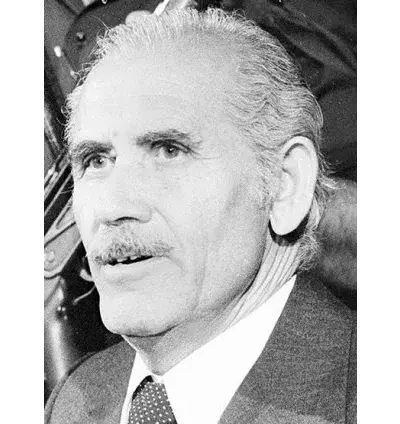
Nur Muhammad Taraki was an Afghan communist statesman during the Cold War who served as President of Afghanistan from 1978 to 1979. Taraki was born in Nawa, Ghazni Province and graduated from Kabul University, after which he started his political career as a journalist. He later became one of the founding members of the People's Democratic Party of Afghanistan (PDPA) and was elected as the party's general secretary at its first congress. He ran as a candidate in the 1965 Afghan parliamentary election but failed to win a seat. In 1966 he published the first issue of Khalq, a party newspaper, but the government closed it down shortly afterward. Taraki led the Khalq wing of the PDPA. In 1978 he, Hafizullah Amin and Babrak Karmal initiated the Saur Revolution and established the Democratic Republic of Afghanistan.
