Mark Twain Quotes
… when a Library expels a book of mine and leaves an unexpurgated Bible lying around where unprotected youth and age can get hold of it, the deep unconscious irony of it delights me and doesn't anger me.
Samuel Langhorne Clemens, 1835-1910. A number of his books were censored at the time, yet of all the improprieties that were in his books, there were examples just as “bad” in the Bible which is full of sex, illicit and otherwise. See {630330} for another comment on the censoring of his books.
Mark Twain, Writer, Founder, Anti-Imperialist League, Letter to Mrs. F. G. Whitmore, February 7, 1907
Sourced by: Eigen's Political and Historical Quotations

Samuel Langhorne Clemens, 1835-1910. Clergymen led the movement in Denver to have the book banned. Many communities banned the book because there is a serious interracial interaction; others thought the language to course and improper; others thought that it was seditious. But most of the educated Americans recognized the book for what it was—one of the greatest books of American literature See {630329} for another comment on the censoring of his books.


It not until July 5, 1727 that another imperial decree was issued Ibrahim Muteferrika establishing the first Turkish printing press.


Actually, in the modern English tradition there is no censorship of library materials, but for many countries including some democracies, there is library censorship including some in the United States. However, the Internet has become the most democratic as government censorship is even harder, but still China, Saudi Arabia, and some other countries even censor the Internet.

This is another of Heine’s predictions of Nazi Germany. The book burning was followed by the Holocaust. See {622242}.


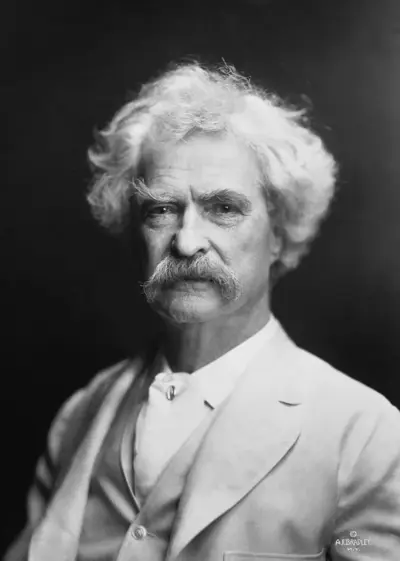
- Born: November 30, 1835
- Died: April 21, 1910
- Nationality: American
- Profession: Author
Samuel Langhorne Clemens, known by his pen name Mark Twain, was an American writer, humorist, entrepreneur, publisher, and lecturer. He was lauded as the "greatest humorist the United States has produced," and William Faulkner called him "the father of American literature". His novels include The Adventures of Tom Sawyer (1876) and its sequel, the Adventures of Huckleberry Finn (1884), the latter often called "The Great American Novel".
