Lao Tzu Quotes
What's the difference between yes and no?


When accused of being a baby killer for her views on abortion:


This quotation illustrates a great problem with treaties in international law. Here an opponent of the Egyptian regime and one who disapproves of the regime before it, wants to repudiate the treaties that had been signed by previous Egyptian governments. So when there is a regime change, can a new regime repudiate earlier treaties? International law says no, but if a new government refuses to follow its obligations, then it is left to the other treaty partners to put pressure on them--breaking diplomatic relations, trade sanctions, even war. For example, President Thomas Jefferson made a treaty with the French Dictator Napoleon and bought the Louisiana Territory which includes a number of current American states. If a new French government abrogated the treaty of the dictator on the grounds that it did not represent the will of the French people and tried to take back their land, war could ensue. Nations very rarely repudiate treaties for if they did, who would sign any new ones?


Shortly after Henry Morgenthau had become Secretary of the Treasury he held a press conference. A veteran reporter asked him very difficult, detailed technical financial questions which the Secretary had not been exposed to. He observed of the reporter, "You must be new here."

Asked if "Doonesbury" creator Garry Trudeau, who was highly critical of President George W. Bush, would be invited to the White House with other editorial cartoonists to have lunch with President Bush:

Wickes was asked if workers did not have a right to form a union. Earlier, many industrialists took the position that there was not even a right to form a union. This evolved to the more politically palatable position stated by Wickes. The result was the same however—no unions because very few—perhaps no—company would recognize a union if it was not required by law, and this is the way the law evolved—to require a company to recognize a union if it is voted upon by a majority of the workers.
Whithead’s view which seems intuitively right to most citizens, tends to be the one that the majority espouses but the minority opposes. At the time, the Republicans controlled the White House and there were a number of polarizing issues, where the Republicans could not obtain consensus and then decided. However, then the Democrats gained control of the White House and Congress the next year, it was the Democrats who claimed that they had to decide. The Republicans, now in the majority, argued that significant changes in America should not be made by narrow majorities and major issues should be tabled if there was no substantial majority. That was the position that the Democrats had espoused when they were in the minority.


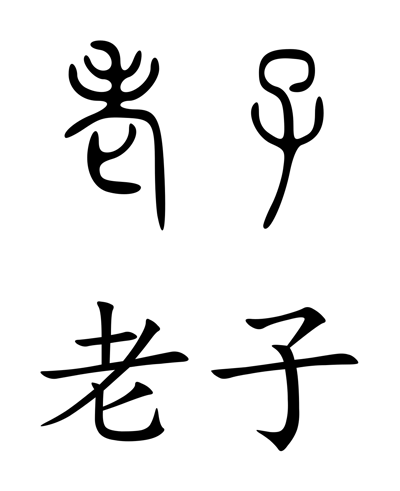
Lao Tzu (/ˈlaʊˈtsuː/ or /ˈlaʊˈdzʌ/), also rendered as Laozi (UK: /ˈlaʊˈzɪə/; US: /ˈlaʊˈtsiː/; Chinese: 老子, Mandarin: [làu̯.tsɹ̩]; commonly translated as "Old Master") and Lao-Tze (/ˈlaʊˈdzeɪ/), was an ancient Chinese philosopher and writer. He is the reputed author of the Tao Te Ching, the founder of philosophical Taoism, and a deity in religious Taoism and traditional Chinese religions.
