Milton Friedman Quotes
Unfortunately, unanimity is not always feasible.
Friedman, Milton. Capitalism and Freedom. University of Chicago Press, 1962, p. 23.


Whithead’s view which seems intuitively right to most citizens, tends to be the one that the majority espouses but the minority opposes. At the time, the Republicans controlled the White House and there were a number of polarizing issues, where the Republicans could not obtain consensus and then decided. However, then the Democrats gained control of the White House and Congress the next year, it was the Democrats who claimed that they had to decide. The Republicans, now in the majority, argued that significant changes in America should not be made by narrow majorities and major issues should be tabled if there was no substantial majority. That was the position that the Democrats had espoused when they were in the minority.


In 1871 the congressman refused to serve as chairman of a committee to investigate the Ku Klux Klan. Such pandering to the South was common for politicians who had national aspirtation. If the politican served on such a committee, he would have to aknowledge the existance of the murders, torture, and other criminal activity of an organzation that was very popular in the South. Or he would have to cover up the KKK crimes and lose the support of Northerners. So refusing to serve on the committee was the prudent solution.

The card was issued to all American troops in the theater. Similar versions were distributed to troops in Iraq, and other Arab countries.


He was referring to the 2016 Presidential Campaign Politifact showed that Hillary Clinton’s facts were not valid and truthful 25 percent of the time and Donald Trump’s were false more than 70 percent of the time. Never before have there been so many falsehoods exchanged in a Presidential Campaign.


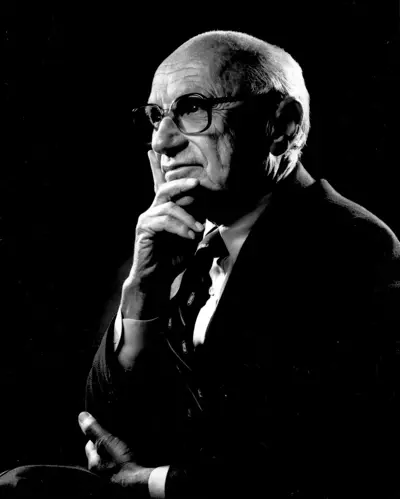
Milton Friedman was an American economist and statistician who received the 1976 Nobel Memorial Prize in Economic Sciences for his research on consumption analysis, monetary history and theory and the complexity of stabilization policy. With George Stigler and others, Friedman was among the intellectual leaders of the Chicago school of economics, a neoclassical school of economic thought associated with the work of the faculty at the University of Chicago that rejected Keynesianism in favor of monetarism until the mid-1970s, when it turned to new classical macroeconomics heavily based on the concept of rational expectations. Several students and young professors who were recruited or mentored by Friedman at Chicago went on to become leading economists, including Gary Becker, Robert Fogel, Thomas Sowell and Robert Lucas Jr.
