Steven Wright Quotes
What do batteries run on?
Wright, Steven. I Have a Pony. Warner Bros. Records, 1985.


He anticipated Wi Fi but claimed that he had a method of transmitting large amounts of electricity through the air or space. In the 21st century, scientists at MIT were able to power a standard light bulb without wires and Tesla’s prediction will become reality. We do not know to this day if the methods he was working on could have worked on a large scale because his notes and plans have been lost, The large building and tower he constructed for this before his backers would fund it no longer, still exists on Long Island. Tesla was one of the great American immigrant scientists. He found in America the kind of intellectual and operational freedom that did not exist in the rigid, monarch-controlled, Austro-Hungarian Empire. He developed patents and techniques that formed the technological bases of radio, telephone long distance, TV, cell phones, Wi Fi, just to name a few. Most important he was Thomas Edison’s great nemesis. Edison invented DC electric generators that could power factories or entire streets in a neighborhood. Tesler invented and developed AC electrical technology which could power entire cities and he could move electricity over long distances which Edison could not. Tesler was one of the first scientists to conceive of and try to implement “Big Science” where there were huge capital investments to develop machines and systems to do what had never been done before—philosophically like the CERN Hadron Collider. Tesler even convinced a large corporation to finance the construction of a massive building and tower so he could experiment with the wireless transmission of electricity. However, as the industrial democracies have learned, Big Science can only be funded by governments and it often takes sever working in consort to afford the huge investment that is required. In Tesler’s era, the federal and state governments did not fund scientific research so his work was not only technically ahead of his time but also conceptually. He anticipated most of the problems and need for a national power grid that was challenging America even at the beginning of the 21st century.


Bergland was Director of the National Rural Electric Cooperatives at the time of the statement.

California deregulated it’s electrical utilities who sold their generating capacity to others. As power consumption grew, there was not enough generating capacity in California and the state had to buy on the open market where they were gouged. The cost of electricity soared by 450 percent in the first year alone.


At the time, millions of Americans had no access to electrical power, especially in the rural areas. FDR and the New Deal changed that for millions of Americans with the Rural Electrification initiatives. Private electric utility corporations wanted the monopoly but did not want to sever everyone. The cost to electrify a densely populated area is much less on a per capita bases than for a rural area where it might take 25 miles of wire to serve 5 families as opposed to a city where the same 25 miles of wire might serve 5000 or even more families. The only solution of for the densely populated area to pay a little more and subsidize the rural areas home and farm electricity and require the utility corporations to serve everyone. That is essentially what happens today, and the subsidy not only comes from higher rates but also the general tax revenue of the Federal Government and many states. Before the New Deal, under Hoover there was no federal attempt to solve this problem. FDR’s administration, however come up with a number of ways, many of which are still in use today.

Puerto Rico was hit by a hurricane which had a devastating effect on the infrastructure of the island. Cruz, Mayor of San Juan, was frustrated when the Federal response from FEMA and the military was very slow to materialize.


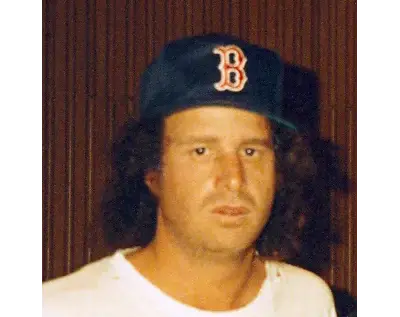
Steven Alexander Wright is an American stand-up comedian, actor, writer, and film producer. He is known for his distinctly lethargic voice and slow, deadpan delivery of ironic, philosophical and sometimes nonsensical jokes, paraprosdokians, non sequiturs, anti-humor, and one-liners with contrived situations.
