Ambrose Bierce Quotes
Electricity is the power that causes all natural phenomena not known to be caused by something else


This quotation illustrates how scientifically sophisticated some of the Founding Fathers were.

He anticipated Wi Fi but claimed that he had a method of transmitting large amounts of electricity through the air or space. In the 21st century, scientists at MIT were able to power a standard light bulb without wires and Tesla’s prediction will become reality. We do not know to this day if the methods he was working on could have worked on a large scale because his notes and plans have been lost, The large building and tower he constructed for this before his backers would fund it no longer, still exists on Long Island. Tesla was one of the great American immigrant scientists. He found in America the kind of intellectual and operational freedom that did not exist in the rigid, monarch-controlled, Austro-Hungarian Empire. He developed patents and techniques that formed the technological bases of radio, telephone long distance, TV, cell phones, Wi Fi, just to name a few. Most important he was Thomas Edison’s great nemesis. Edison invented DC electric generators that could power factories or entire streets in a neighborhood. Tesler invented and developed AC electrical technology which could power entire cities and he could move electricity over long distances which Edison could not. Tesler was one of the first scientists to conceive of and try to implement “Big Science” where there were huge capital investments to develop machines and systems to do what had never been done before—philosophically like the CERN Hadron Collider. Tesler even convinced a large corporation to finance the construction of a massive building and tower so he could experiment with the wireless transmission of electricity. However, as the industrial democracies have learned, Big Science can only be funded by governments and it often takes sever working in consort to afford the huge investment that is required. In Tesler’s era, the federal and state governments did not fund scientific research so his work was not only technically ahead of his time but also conceptually. He anticipated most of the problems and need for a national power grid that was challenging America even at the beginning of the 21st century.

Spinoza was one of the most feared intellectuals in human history—feared, that is, by the established power structures. Spinoza’s ideas were considered so radical and dangerous that he was the only man in history who was excommunicated by the Catholics, the Jews and the Muslims. This quotation is an example of why the religions were so fearful of his ideas. Essentially, he stated that Priests, Pastors, Rabbis, Imams and all clerics have no monopoly on understanding, knowledge, or wisdom. Each man was to think for himself and clerics should have to prove their claims and convince people, not ask them to have faith in their ideas and instructions. Spinoza himself was a religious Jew and produced all his work to try and persuade others. He challenged all clerics of all religions to do the same. When people started to listen to Spinoza, the clerics wanted to get rid of his influence. Therefore they banned all from talking to him and above all banned his books and other writings.

This is a very interesting philosophical and scientific quotation because he states that in Science, matter and energy are equivalent, which 40 years later would be asserted and proven by Albert Einstein in his Theory of Relativity. There were no notes or details ever found from Ludlow, and he certainly did not have the mathematical background to have showed or proved the mathematical relationship. It was almost certainly a type of metaphysical statement and surely he had no idea of how accurate it was.
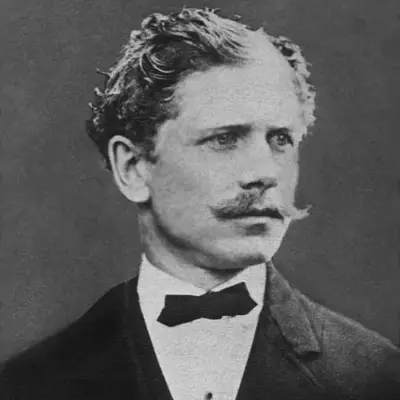
Ambrose Gwinnett Bierce was an American short story writer, journalist, poet, and Civil War veteran. His book The Devil's Dictionary was named as one of "The 100 Greatest Masterpieces of American Literature" by the American Revolution Bicentennial Administration. His story "An Occurrence at Owl Creek Bridge" has been described as "one of the most famous and frequently anthologized stories in American literature"; and his book Tales of Soldiers and Civilians (also published as In the Midst of Life) was named by the Grolier Club as one of the 100 most influential American books printed before 1900.
