John Lehman Quotes
We were not prepared intellectually. Those of us in the national security field still carried the baggage of the Cold War. We thought in concepts of coalition warfare and the Warsaw Pact. When we thought of terrorism, we thought only of state-sponsored terrorism, which is why the immediate reaction of many in our government agencies after 9/11 was: Which state did it? … We had failed to grasp, for a variety of reasons, the new phenomenon that had emerged in the world. This was not state-sponsored terrorism. This was religious war. .... This was the emergence of a transnational enemy driven by religious fervor and fanaticism. Our enemy is not terrorism. Our enemy is violent, Islamic fundamentalism.
John F. Lehman, Secretary of the Navy, Member of the September 11 Commission, Speech, 130th Annual Meeting of the U.S. Naval Institute and Annapolis Naval History Symposium on 31 March 2004
Sourced by: Eigen's Political and Historical Quotations


6th Baron Byron. This is one the earliest references to the ultra-fundamentalist Wahhabi Islamic sect which dominated Saudi Arabia Islam in the late 20th and early 21st century and which inspired terrorism against the West and Israel. When Byron wrote this canto the sect was just a decade old and had already taken over Mecca by violence. Byron was prophetic.

This statement of the Prophet is often quoted by Yusuf al-Qaradawi and other moderate, modernist Islamic clerics and leaders urging people to eschew terrorism and Muslim fundamentalist extremism.

Voltaire had little respect for any organized religion, but found Islam particularly barbaric and absurd. However he was also very negative about Christianity. See {621191} . The Ottoman Empire, centered in Turkey, then controlled all the Islamic countries of the Middle East. Europeans then often referred to all Muslims as “Turks.”

Over a century ago, modern Islamists were critical of the Wahhabi sect for their extremism. Unfortunately, the Saudi Arabian royal family whose absolute control of the kingdom could be threatened by an extremist religious movement, cut a deal with the Wahhabi that not only gave them control over all religious and legal interpretations of Sharia in the kingdom, but also gave them large amounts of money with which the Wahhabi expanded and exported their extremist brand of Islam to many other counties—including the United States. A large part of the Islamic terrorism of the end of the 20th century into the 21st was caused by fanatics who had been exposed to Wahhabi schools (madrassas), mosques or materials which are virulently anti-Christian and ant-Semitic. Muslim intellectuals like Muhammad Abduh had warned about extremism in general and Wahhabi extremism in particular.


The incident to which he referred was Islamic extremist terrorists attacking with assault weapons a group of unarmed tourists killing over 30. Tunisia, although it has a large majority Muslim population, became a secular republic after its Arab Spring revolution. Tunisia's economy is dependent on tourism, which is diminished by the fear of more terrorist attacks.


Slogans taken from posters listing 10 people targeted by Muslim extremists. Most were people who had said or published material that some fundamentalist Muslims had decided were offensive to Islam. One was Charlie Hebdo, the French Publisher who Islamic terrorists murdered later. Note the Americanisms that the terrorist propagandists adopted. The Wanted Dead or Alive was taken from the posters of the American West of the 19th century. The "Yes we can" was lifted from the Barack Obama 2008 campaign slogan. The "Bullet A Day Keeps the Infidel Away" is a takeoff on the American saying "An apple a day keeps the Doctor away." One of the reasons for these Americanisms was that the founding editor was Samir Khan, self-described American traitor.


It is this verse that for some Muslims justifies terrorism against non-Muslims. See {584354} for a specific example. There are similar provisions in the Old Testament which a few extremely conservative Jews and Christians have used to advocate for blasphemy being a capital crime. Note that if an unbeliever repents and becomes a Muslim, he should be spared.
This sura is interpreted by some Islamic fundamentalists as absolution for the killing of a non-Muslim by a Muslim. It was Allah who did it. In a greater sense, critics of Islam observe that many Muslims and Islamic nations have a double standard of responsibility for crimes. If the victims are Muslims, the normal standards of morality hold; but if a non-believer there can be no crime. Terrorism, torture, beheading, mass murder can all be done with a clean conscience if a Muslim takes this interpretation of this sura. Many Muslims however take an opposite point of view. These people do not have the concept of fatalism and lack of free will that others believe. There is a parallel to this problem in Judeo Christian countries although it is less common statistically. But the murder of physicians who perform abortions, and the Jewish radical fundamentalist who killed innocent Arabs at worship are examples of people who viewed themselves as instruments of God in their heinous activities.


Few Islamic leaders have publicly made such unequivocal statements about the problem of extremism and fanaticism.

This quotation is often given by those who believe that nothing has really changed regarding the Arabs and non-Islamic Westerners in the last century. While the support of dictators, Israel and support for that democracy, the artificial Western imposed borders, 9-11, or the Iraq war is often cited as the cause of Arab hostility and murderous aggression, as this quotation demonstrates, the problems and attitudes and behaviors existed long before any of these occurred. The borders were not set until after WWI and all the other causes occurred almost 50 years later, Yet there was still the propensity for fanaticism and violence. Sikes actually was one of those who was to determine the Arab borders, making one of the first “suggested” maps of the area for the English.
See {586916} for a passage from the Koran supporting his point.


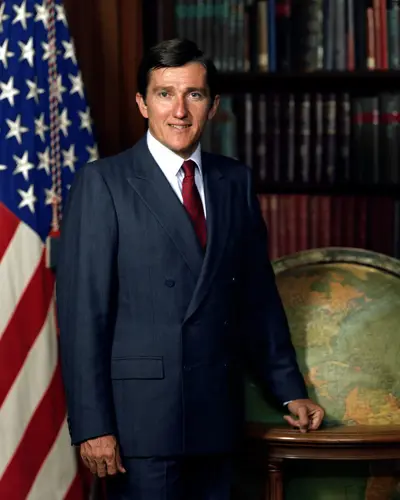
John Francis Lehman Jr. is an American private equity investor and writer who served as Secretary of the Navy (1981–1987) in the Ronald Reagan administration where he promoted the creation of a 600-ship Navy. From 2003 to 2004 he was a member of the 9/11 Commission.
