Ahmed Nazif Quotes
Nothing will justify the killing of innocent people.
Ahmed Nazif, Prime Minister of Egypt, Interview with Wolf Blitzer, CNN Late Edition, July 31, 2005
Sourced by: Eigen's Political and Historical Quotations

The implication of this sura is that it is permissible to kill non-Muslims but not Muslims. The same is true of slavery. Another prescription of this sura is that a Muslim should never kill another Muslim, so while this sura is very discriminatory and in that sense reprehensible, it does call into question the Islamic terrorist practice of the late 20th and early 21st century of killing fellow Muslims who might vote, serve in an official role or cooperate with non-believers. And it definitely to the Western mind prohibits the kind of Islamic sectarian violent practice of Sunni Muslims and Shiite Muslims torturing and butchering each other—a practice that has continued since the two groups fought over who was the rightful successor to Muhammad. The religious rationale for that murderous behavior is that each Islamic group sees the other as apostate and therefore no longer real Muslims.

Muslim clerics throughout the world had been relatively mild in their criticism of Islamic Extremists and Terrorists. Delic was one of those who urged stronger moral statements. Many of the Muslim clerics in the world actually were themselves holders of Wahhabi and other extremist views. However, many also opposed terrorism and felt that there was nothing in Islam that could justify the indiscriminate killing. However, a number of these were intimidated lest an extremist Muslim cleric issue a Fatwa calling for his death for heresy. Most of us did not then, and even today, do no really understand the extent and frequency of these threats in the Muslim world (and even in the West) and the very frequent assassination or serious wounding of those Muslims who publicly criticize the extremist terrorists. Delic had much more courage than most.


This statement was dramatically notable because he is one of the few Muslim clerics to come out unequivocally against the 9-11 attack.


She is a leading American Arab who is a Syrian expatriate. The examples she gives in the beginning of the quotations are relatively recent atrocities where Muslims have attacked and brutally murdered other Muslims. She articulates one of the theories to explain the Islamic propensity to brutality and violence that the religion itself, when taught literally which it so often is, actually produces an inclination and glorification of brutal violence and develops a tolerance and acceptance of Islamic violence.

This statement of the Prophet is often quoted by Yusuf al-Qaradawi and other moderate, modernist Islamic clerics and leaders urging people to eschew terrorism and Muslim fundamentalist extremism.


Many Muslims used passages in the Koran to justify the terrorist attack on New Work and the Pentagon.

He drove a rented SUV into a crowd at a Dining Hall at the University of North Carolina from which he had recently graduated. He was an Iranian-born American citizen who had perceived that American policies and practices abroad led to the death on many Muslims. His interpretation of the Koran agrees with most of the radical, extremist, theologians, but does not comport with the interpretation of moderate Muslim religious thinkers. In 2008, he was convicted and sentenced to 33 years of prison.


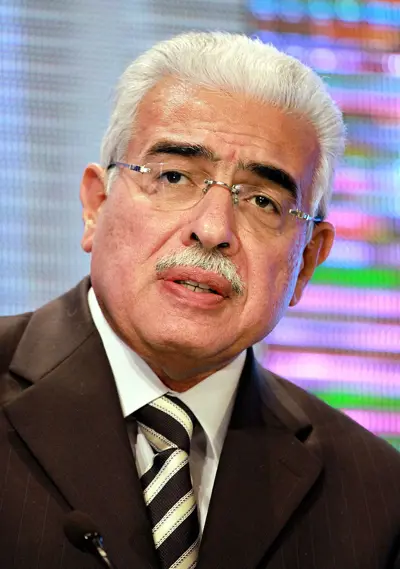
Ahmed Nazif served as the Prime Minister of Egypt from 14 July 2004 to 29 January 2011, when his cabinet was dismissed by President Hosni Mubarak in light of a popular uprising that led to the Egyptian Revolution of 2011. Nazif was Acting President of Egypt from 5 March to 15 April 2010, when President Mubarak delegated his authorities to Nazif while undergoing surgery in Germany.
